


In this article about what habits are: Habits. We all have them. Making a cup of coffee when you get out of bed. Having 2 slices of bread with peanut butter for lunch every day. Brushing your teeth twice a day. Smoking a cigarette when you get out of the car. Taking a cookie with your tea or drinking a vegetable juice every morning. Daily life is characterized by habits. We repeat the same actions every day, at home, at work, or in contact with others. Without realizing it, 47% of our daily activities are exactly the same. 1 These are our habits.
What are habits explained
‘Successful people aren’t born that way. They become more successful by establishing the habit of doing things unsuccessful people don’t like to do.’
What are habits and how do they develop?
When behavior is repeated, cognitive, neurological, and motivational changes occur.2 Associations form in the memory between time, locations, and other stable contexts in which your habit takes place. They are not intentions or decisions, but the actions are stored in our memory. An action is triggered when the context is more or less the same as that of the learned habit.3 For example, walking into a dark room triggers the habit of turning on the light without the intention of doing so. The more often you perform an action, the stronger the association between that action and the context in our memory becomes. Therefore, the more often you have performed a habit, the harder it is to change it. This can also happen unconsciously.
An unhealthy lifestyle
An unhealthy lifestyle is essentially nothing more than a series of unhealthy habits. To achieve a healthy lifestyle, you need to replace these unhealthy habits with new, healthy ones. These do not develop after a good night's sleep or after having a salad for lunch once. You need to take your time for this. It is very likely that some habits go hand in hand. For example, if you want to make it a habit to exercise for 30 minutes every morning, you will also make healthier choices regarding food and perhaps watch less television.
Changing habits
Changing a habit is often accompanied by a goal. For example, losing 30 kg. To succeed in changing unhealthy habits, the goal must be realistic and achievable. If the goal is not achievable, motivation will gradually fade away. So, losing 30 kg may be your goal, but to get there, you can first set smaller goals, such as losing 10 kg.
To lose weight, something needs to change in your current lifestyle. This also often happens in steps. Suppose you want to change the habit of eating chocolate every evening into a healthy habit. To succeed in this, it is important to ask yourself what the underlying motivation is; why is it so important for you to lose 10 kg? Do you feel sluggish and tired? Do you want to play with the kids more often and easily? Or has your environment motivated you to lose weight? To sustainably change a habit, it is important that the motivation comes from within yourself (intrinsic motivation) and not from others (extrinsic motivation). The greater the intrinsic motivation, the stronger the foundation for creating new healthy habits.
Additionally, you need to consider whether it is feasible for you to change the habit. If changing the habit seems very unrealistic, you might be better off working towards your goal in other ways. If you work 60 hours a week and have to support your family, it might be too much to ask to exercise intensively 3 times a week. In that case, it might be wiser to start with a healthy diet, where you leave the chocolate aside. Once you have gone through these steps and it is clear to you why you want to change, it is time to change unhealthy habits. Below are 3 tips to help you with this.
Discover routines and triggers
As already discussed, routines and associations between time, location, and emotion are important triggers for habits.2 Which habit do you want to change or learn? Do you want to eat less chocolate? To break this habit, it is important to discover what triggers it. When do you reach for chocolate? This can be due to a combination of time, location, emotion, and other environmental factors. But also due to the preceding action. Do you want to sleep longer? Find out which habits are preventing you from doing that.
Rewards
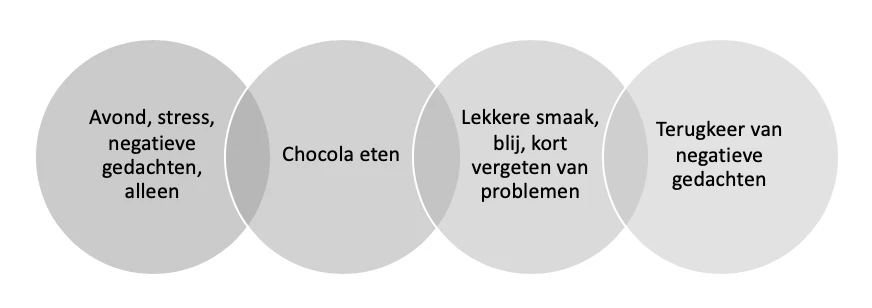
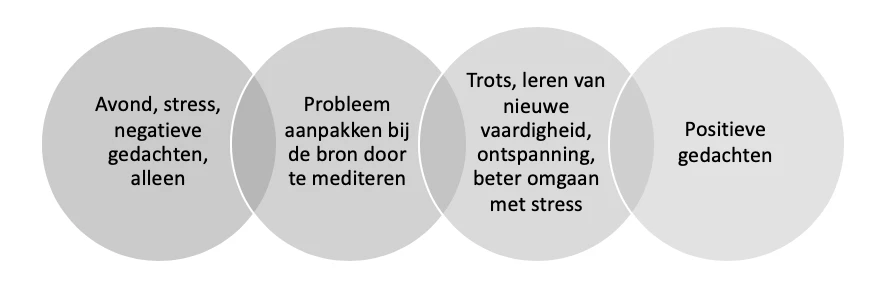
A habit often develops because a reward follows. You eat chocolate because it tastes good and makes you happy. The more often you are rewarded by an action, the stronger the habit becomes. Find another reward that makes you no longer need the old habit. For example, change the habit of eating chocolate into a 10-minute walk or meditation. This way, you forget that you crave chocolate, and you feel good about yourself because you have walked. It often takes some searching to find what works for you. Look for an action that replaces the old unhealthy habit but still provides a reward. Do you want to learn a new habit? Make sure to reward yourself when you have performed the action.
Break it
Now that you know what triggers the habit of eating chocolate and you have thought of a reward, you can break the habit of eating chocolate. Do you want to learn a new habit? Then perform this habit at fixed times and reward yourself for it (and not with a piece of chocolate ;)). For example, have you discovered that stress is a trigger for you to eat chocolate? Address the problem at its source and find a habit that helps you cope better with that stress, such as meditation. Also, remember that eating chocolate only temporarily reduces the feeling of stress.
Old habit:
New habit:
‘Motivation is what gets you started; habit is what keeps you going.’
Repeat!
Creating a habit takes time, and repetition is incredibly important. Keep going until the new healthy habit is fully ingrained in your system. Sometimes there are situations where you fall back into your old habit. This is part of the process. In the case of chocolate, you might eat 2 squares on a bad day instead of the half bar you used to eat. Just pick it up again the next day. Discover what truly drives you to this unhealthy habit and address the problem at its source.
References
Wood, W., Quinn, J., & Kashy, D. (2002). Habits in everyday life: Thought, emotion, and action. Journal of Personality and Social Psychology (83), 1281−1297.
Neal, D.T., Wood, W., Quinn, J.M. (2006). Habits – A Repeat Performance. Association for Psychological Science (14), 4, 198-202.
Wood, W., Witt, M.G., Tam, L. (2005). Changing Circumstances, Disrupting Habits. Journal of Personality and Social Psychology (88), 6, – 918-933.
Also read: Stay fit during menopause: 5 lifestyle tips · more articles on our blog · personal training at Daadkracht.