

Why is staying fit during menopause important?
In this article about staying fit during menopause, we provide 5 lifestyle tips: Staying fit during menopause is important because this life phase is accompanied by hormonal changes that affect your body and well-being. Here are some reasons why it is crucial to remain active and healthy:
Staying fit during menopause: 5 lifestyle tips explained
Preservation of muscle mass and bone density
The decrease in estrogen can lead to muscle loss and osteoporosis. Strength training and weight-bearing exercises help prevent this.
Weight management
Metabolism slows down, making it easier to gain weight. Regular physical activity and a balanced diet help maintain a healthy weight.
Heart health
The risk of cardiovascular diseases increases after menopause. Cardio exercises such as walking, running, or swimming help keep your heart strong.
Mental health
Exercise stimulates the production of endorphins (the happiness hormone), which reduces stress, anxiety, and depressive feelings that can arise from hormonal fluctuations.
Better sleep
Many women experience sleep problems during menopause. Regular exercise leads to daytime fatigue, which can contribute to better sleep at night.
More energy and fewer hot flashes
Staying active can help reduce hot flashes and fatigue, making you feel more vital.
In short, staying fit during menopause helps you not only remain physically stronger but also maintain mental and emotional balance.
Staying fit during menopause: 5 lifestyle tips
Staying fit during menopause requires a combination of exercise, healthy nutrition, and a balanced lifestyle. We share 5 practical lifestyle tips to keep you fit and energetic.
1. Sufficient physical activity
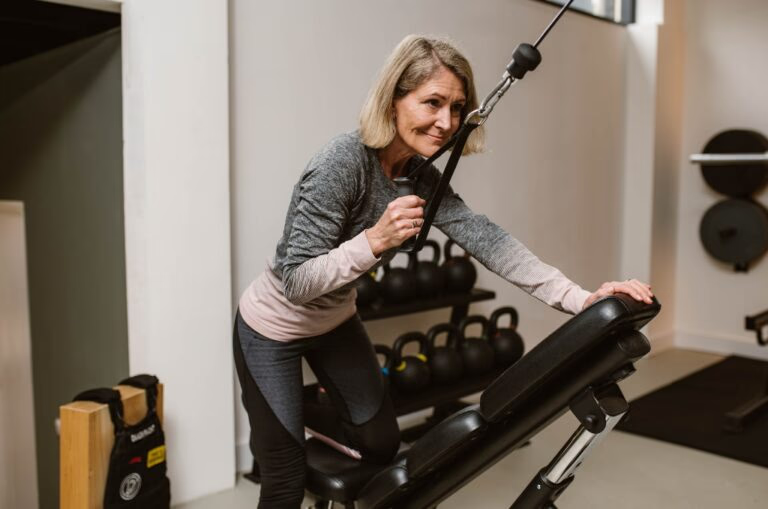
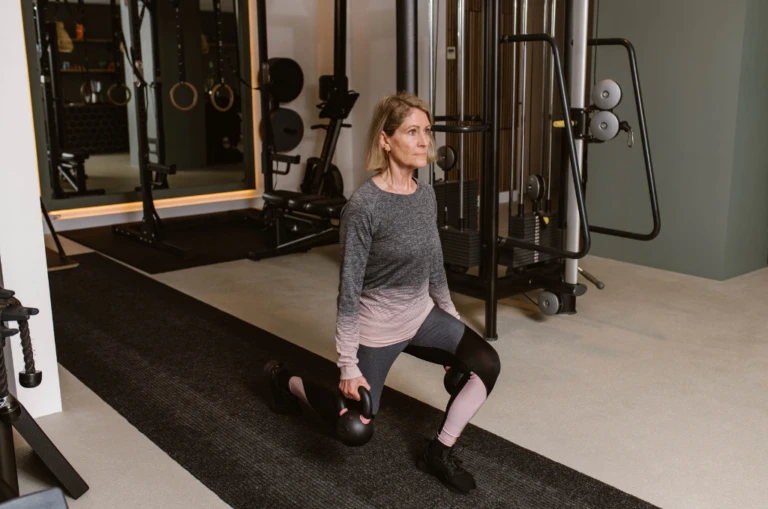
Regular exercise is essential for staying fit during menopause because it helps preserve muscle mass and bone density, which deserves extra attention during this phase. Strength training with weights or your own body weight can help keep your muscles strong and prevent bone loss. Additionally, it is important to work on your fitness. Walking, running, cycling, or swimming are great ways to keep your cardiovascular system healthy and boost your energy levels. Exercises like yoga and Pilates also contribute to flexibility and balance, which helps prevent injuries and reduce stress.
2. Protein-rich nutrition
In addition to exercise, nutrition plays a significant role in how you feel during menopause. Protein-rich foods help preserve your muscles and provide a longer feeling of fullness, reducing cravings. By eating enough whole grains, vegetables, and fruits, you support your digestion and prevent bloating. Healthy fats found in avocados, olive oil, and fatty fish also help maintain a good hormonal balance. Try to avoid processed sugars as much as possible, as they can lead to fluctuations in your energy and weight gain, and consider adding extra calcium and vitamin D through supplements for strong bones.
3. Stable Sleep Rhythm
Sleep is also an important part of your lifestyle for staying fit during menopause. A good night's sleep can sometimes be a challenge due to hot flashes or hormonal changes, but a consistent evening routine can help. For example, avoid screens right before bedtime and ensure a cool and dark bedroom. By going to bed at regular times, you give your body the chance to develop a stable sleep rhythm.
4. Stress Management
Attention to your stress level should not be missing from this list of tips for staying fit during menopause. During menopause, hormonal influences can lead to mood swings and increased stress levels, making relaxation techniques extra important. Mindfulness and meditation help bring calm to your mind, while breathing exercises reduce tension in your body.
5. Water Supply
Finally, adequate hydration is important for staying fit during menopause, especially if you suffer from hot flashes and night sweats. Drinking enough water not only supports your metabolism but also helps keep your energy levels stable.
Staying Fit During Menopause with Daadkracht

Staying fit during menopause is mainly about listening to your body. It is undergoing many changes, and it is important that you learn to sense what your body needs during this phase. Not every day is the same, and that is perfectly okay. Sometimes your body needs movement, other days it asks for rest. By consciously managing your lifestyle and making small adjustments, you can navigate the transition period more smoothly and vibrantly. Need help? Then schedule a free trial lesson at our location in Overveen or Heemstede so we can assist you under professional guidance during this period of your life.