

In this article about the Oura ring for balance between sleep and activity: The Oura ring, a sleep & activity tracker in the form of, you guessed it, a ring.
Oura ring for balance between sleep and activity explained
Before we dive deeper into our experience with the Oura ring, let's cover the basics. What is it, how does it work, and what data is collected? The Oura ring is a sleep and activity tracker. It falls into the category of Apple Watch and Fitbit but in a very different form. While the first two are primarily focused on tracking activity, the Oura ring is more accurate in terms of sleep. The ring contains sensors that track your sleep and activity based on:
– The blood volume per contraction of the heart in the finger, which allows the ring to calculate breathing per minute, heart rate, and the heart rate variability (HRV).
– Body temperature
– Movement of the hand wearing the ring
– Time of day
Based on the data that the ring measures, daily scores for your ‘readiness’, ‘sleep’, and ‘activity’ are provided. The first two are given at the beginning of the day, while the last varies throughout the day depending on how active you are.
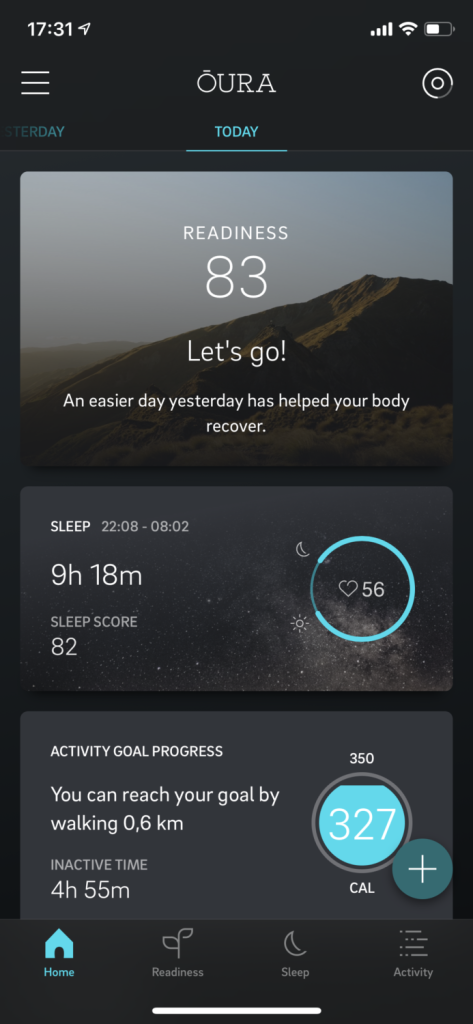
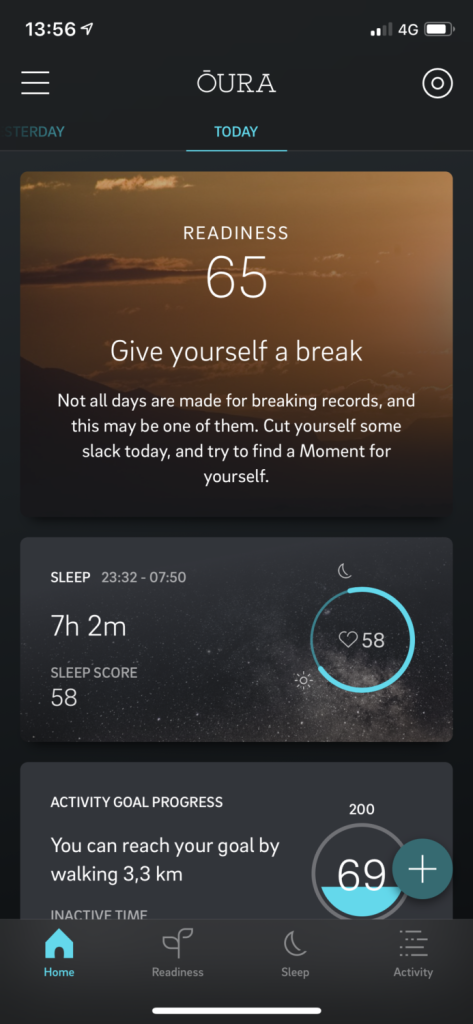
The homepage of the app.
Text for a less favorable readiness score. A good score is above 70, above 85 is excellent. On the homepage, you receive daily tips and explanations when you click on the scores.
READINESS
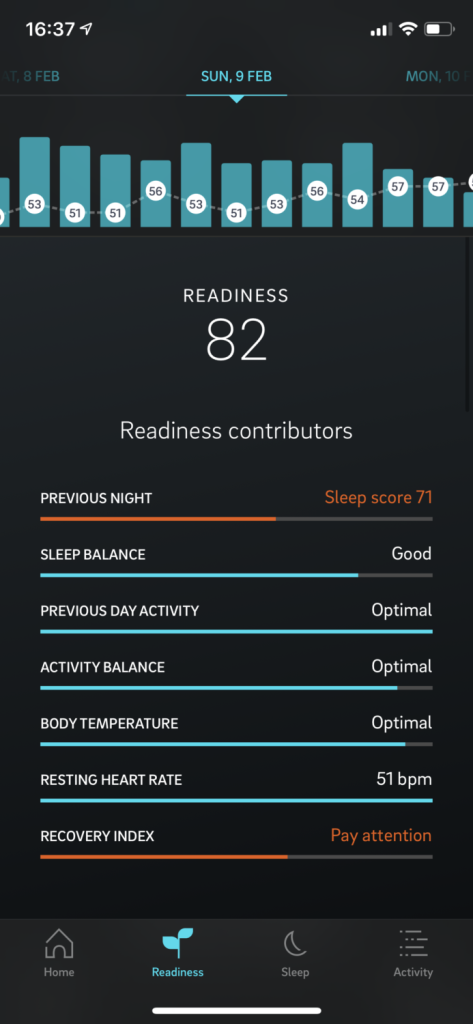
The readiness score provides insight into how ‘ready’ you are for the day. This score indicates whether the amount of rest you get is balanced with your activity. Essentially, the score tells you how much work you can take on that day and is determined based on:
– sleep score
– sleep balance – is the amount of sleep you have received in the past 2 weeks balanced with how much sleep you need
– activity score from the previous day
– activity balance – how does your activity level affect your readiness
– body temperature
– resting heart rate
– recovery index – how long does it take for your resting heart rate to stabilize during the night
The app displays your readiness as follows:
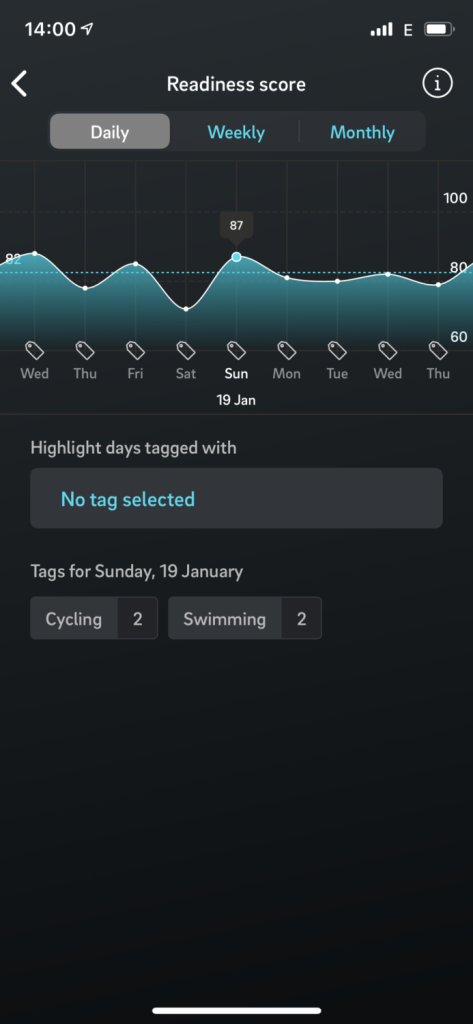
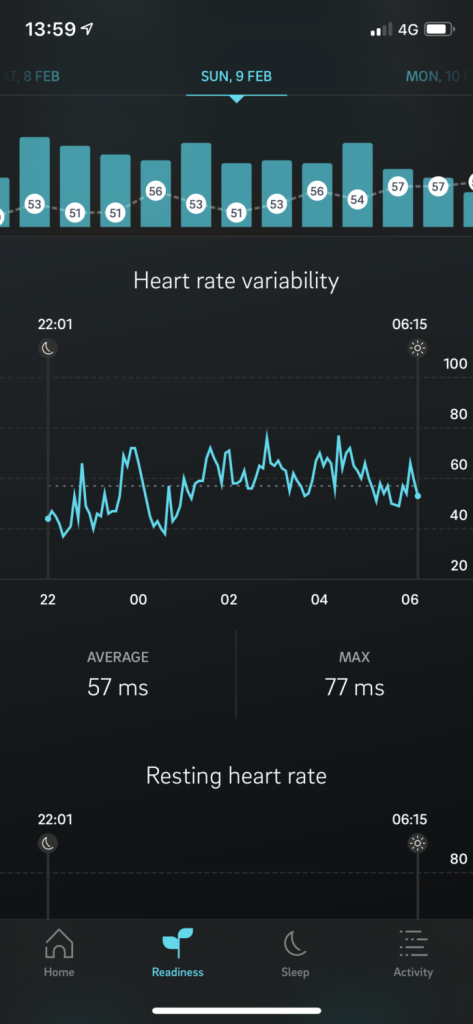
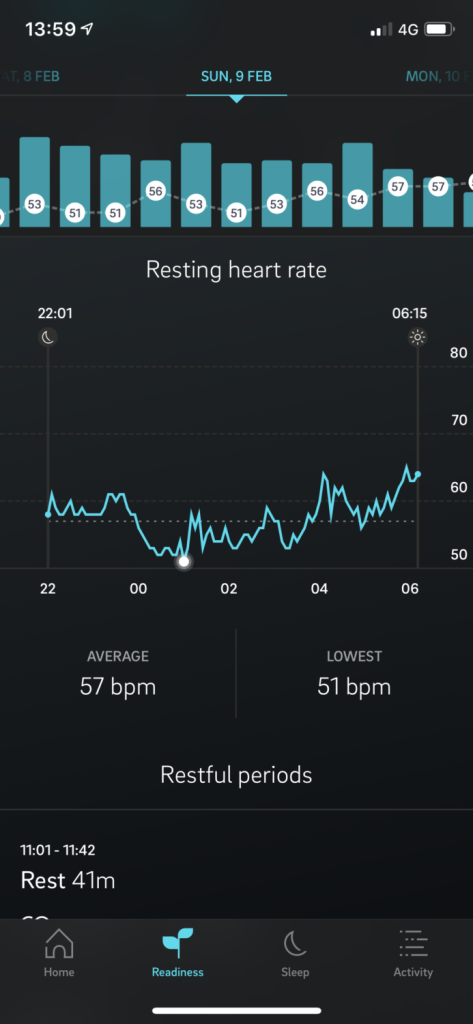
In the app, you can view trends for all data. This allows you to assess over a longer period how things are going with, for example, your readiness. This is ideal when you are trying new things to improve it. At a glance, you can see if this works for you.
The readiness score with contributing factors.
The HRV, which provides insight into your stress level. We have written a blog about this. When you experience a lot of stress, the HRV will be lower and the ‘readiness’ score will also be lower.
A display of your resting heart rate from the past night, with average and lowest heart rate.
SLEEP
Sleep, the aspect for which the Oura ring is well-known. Research has shown that detecting sleep phases and sleep duration is quite effective with the Oura ring, although more research is still needed.1 The sleep score is determined based on:
– total hours of sleep
– sleep efficiency – sleep quality, how many hours of sleep you actually get out of the total time you spend in bed
– restfulness – how often you wake up, do you sleep deeply or lightly?
– hours and percentage of REM sleep
– hours and percentage of deep sleep
– time taken to fall asleep
– timing – having a good rhythm is very important, we wrote about this earlier already
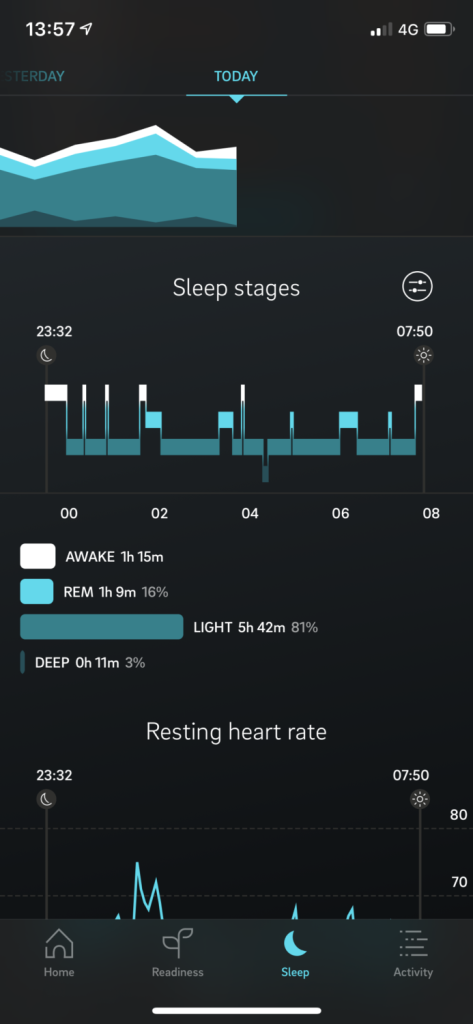
In addition to these components, you can also see in the app how long and how often you were awake and how much light sleep you had based on a graph. The page looks as follows:
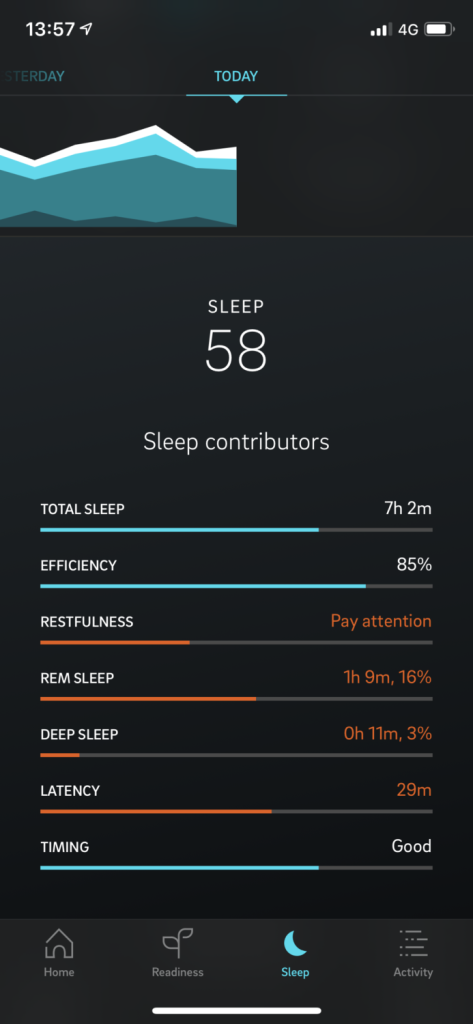
The sleep score with contributing factors. This is an example of a poorer night. Scores above 70 are good, above 85 excellent.
The progression of the night, including sleep stages. Here you can see, for example, how much and how often you sleep deeply, but also how often you wake up. The latter can be an indicator of stress; this is often accompanied by waking up frequently and restless sleep. This is included in the sleep score in the form of ‘restfulness’.
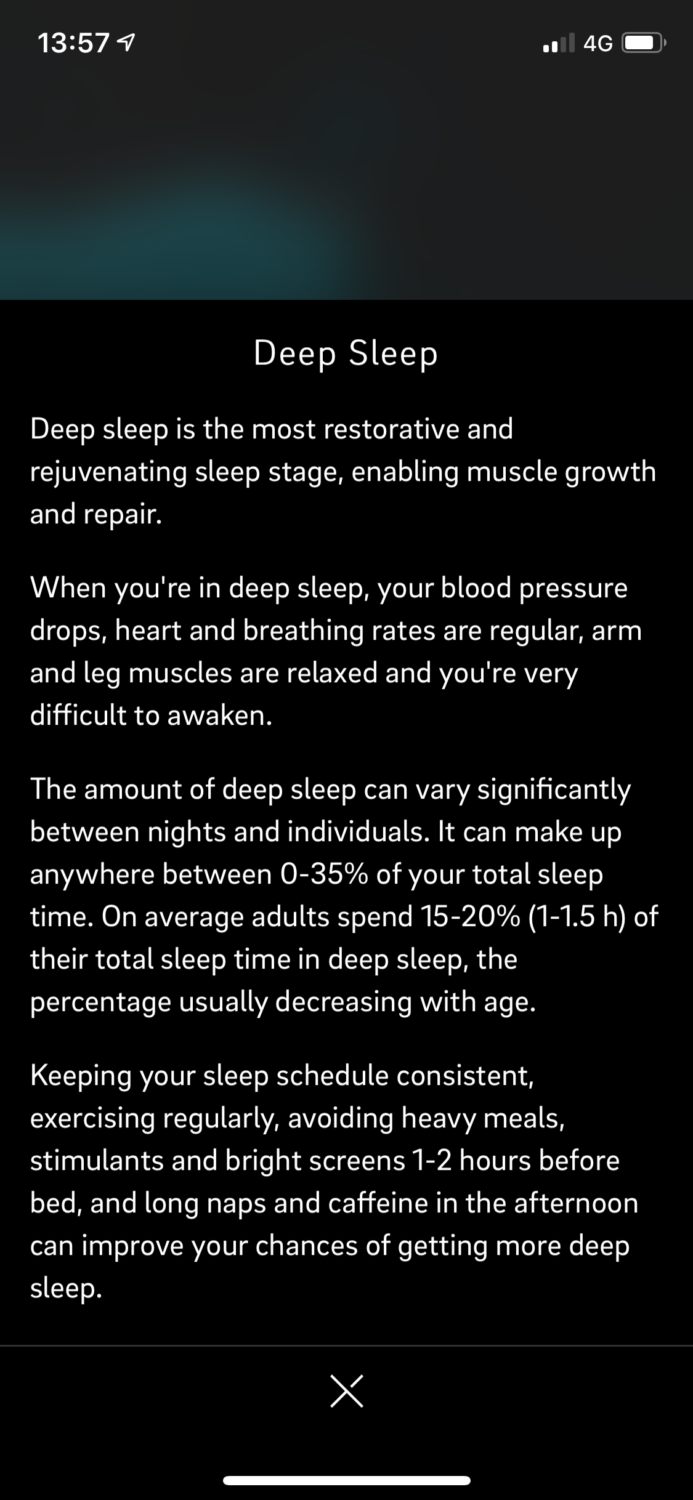
Deep sleep was very low this night, only 11 minutes. When you click on deep sleep in the app, you get more information about it. Why it is important, what is normal, and what you can do to improve it. This applies to every variable that the app displays.
ACTIVITY
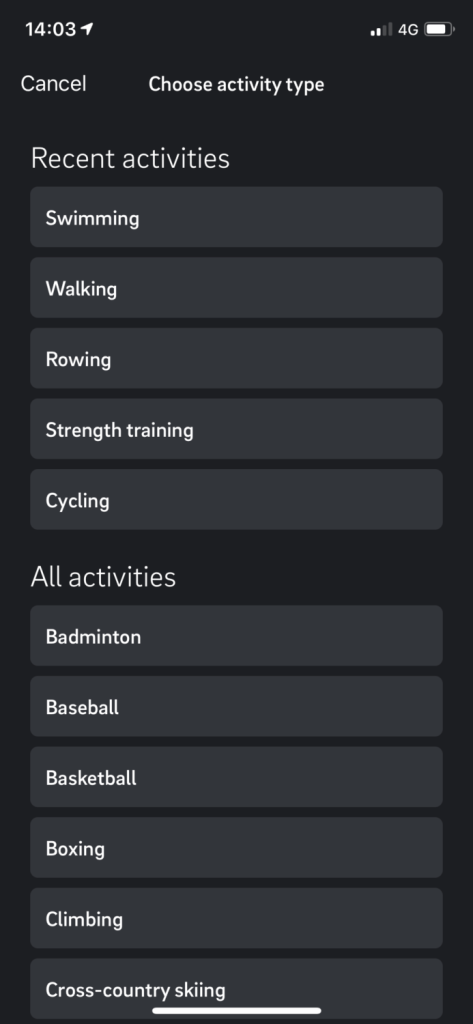
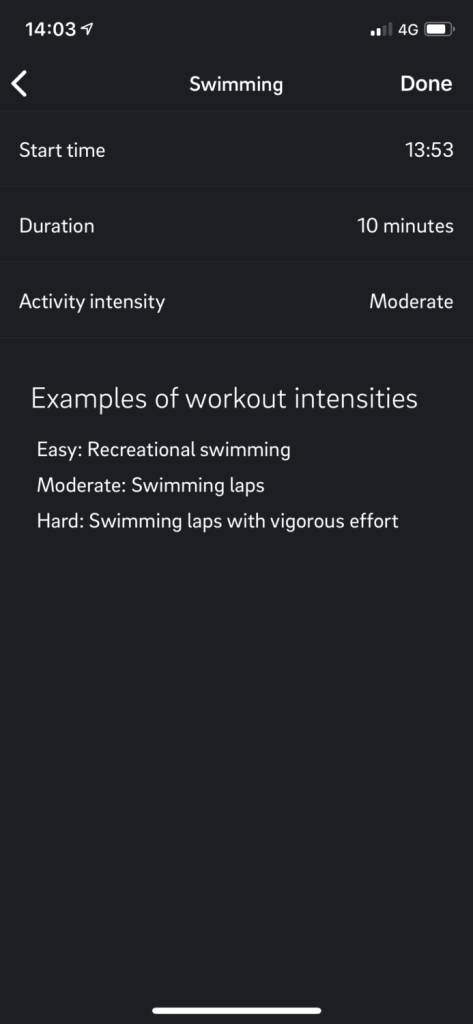
In addition to what the ring is most known for (readiness and sleep), it also displays your activity. The ring does this by measuring the movement of the ring. You can also add activities in the app. Every day, the app gives you a calorie goal based on your readiness score and sleep score. The activity score is determined throughout the day by:
– inactivity – how many hours of the day have you been inactive (standing/sitting)
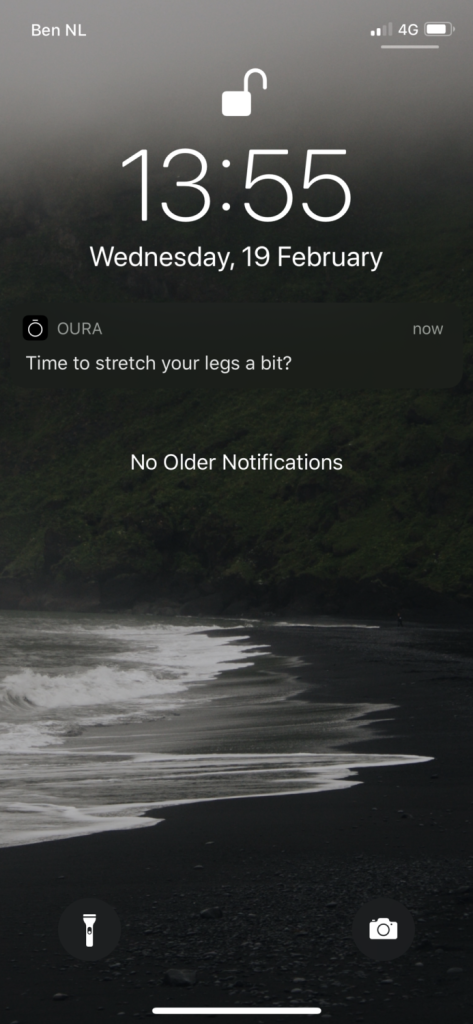
– moving every hour – when you sit or stand still for more than 50 minutes, you receive a notification indicating that you need to move
– meeting daily calorie goals
– training frequency
– training volume
– recovery time
The activity score and adding activities looks as follows:
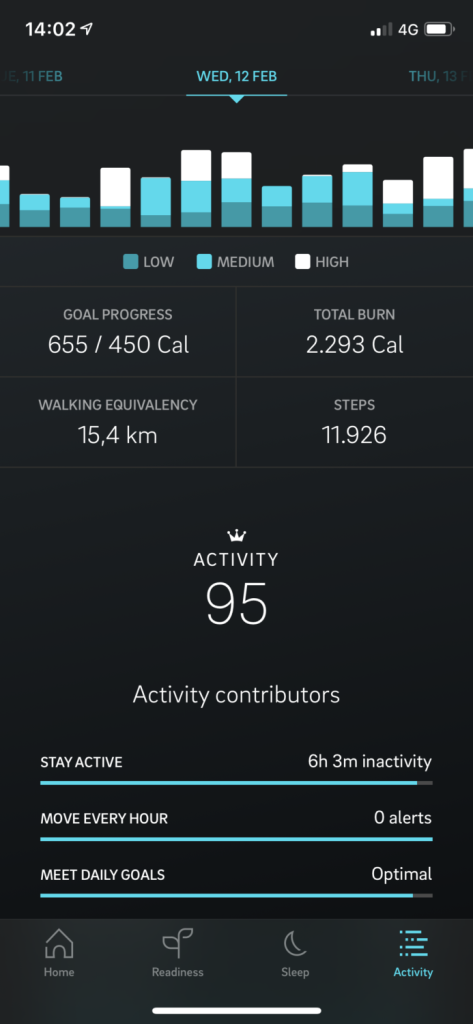
The activity score with variables.
Adding a workout and a few of the different options.
Adding a workout.
The notification you receive when you have been inactive for too long.
WHAT DO WE THINK?
Not essential, but very interesting and educational! Overall, the Oura ring seems to be on the right track. The scores are explainable and often represent how we feel. By using the Oura ring, you become more aware of your sleep behavior and activity. Wearing the Oura ring motivates you to improve your sleep and move more. The app provides insight into where things are going wrong or right, and you can clearly see the effects of lifestyle changes in the trends of the various variables.
The 'readiness' section of the app is very handy. It indicates whether the balance between sleep and activity (but also stress) is in order. When this is low, you know that you need to take action. For example, you might choose to prioritize rest. This can be in the form of sleep, but also in the form of rest during the day; ensuring that your body is not 'on' all day long. The HRV score, which is closely related to stress, is an important factor in this. One that not many other trackers measure, which we see as an added value of the Oura ring. Movement is also important to improve the readiness score. It is important to move enough and not sit for too long, but it is also important that movement is balanced. When you have a low readiness score, it might be better to plan a lighter workout if you are exercising that day.
The app tracks sleep, which seems to be very good. Sometimes when you lie awake for a long time and move a lot, it does not register this as 'bedtime' and it seems to the app that you fell asleep quickly. With a few exceptions, the ring accurately indicates the time you go to bed and wake up to the minute. The ring motivates you to get enough sleep, helps you see its importance, and makes it clear what is going well and what is not, and what you can do about it. In our opinion, there is currently no other tracker on the market that measures and displays sleep as well as this one. It is good to see how often you wake up during the night; this is closely related to stress. Gaining insight is a significant advantage of the Oura ring. Wearing it makes you more aware of your sleep and activity.
Although we didn't actually buy the ring for this, the activity part is surprisingly fun! It motivates you to stand up more often and achieve your calorie goals. It makes you aware of how often and how much you sit. This leads to more movement, which should generally improve overall health and sleep.
All in all, we are very enthusiastic about the app. It is a good tool to gain more insight into your lifestyle, what is going well, and what can be improved. On the Oura website, www.ouraring.com, you can find more information and order the ring.
1. Zambotti, M., Rosas, L., Colrain, I.M., Baker, F.C. (2018). The Sleep of the Ring: Comparison of the Oura Sleep Tracker Against Polysomnography. Behav Sleep Med, 1-15.
Also read: Staying fit during menopause: 5 lifestyle tips · more articles on our blog · personal training at Daadkracht.