

Do you rush to your next appointment right after a workout, or do you take the time for a cooling down? Not everyone is convinced of the benefits of cooling down exercises. However, it is important for your overall recovery to take good care of your body after a workout.
What is a cooling down?
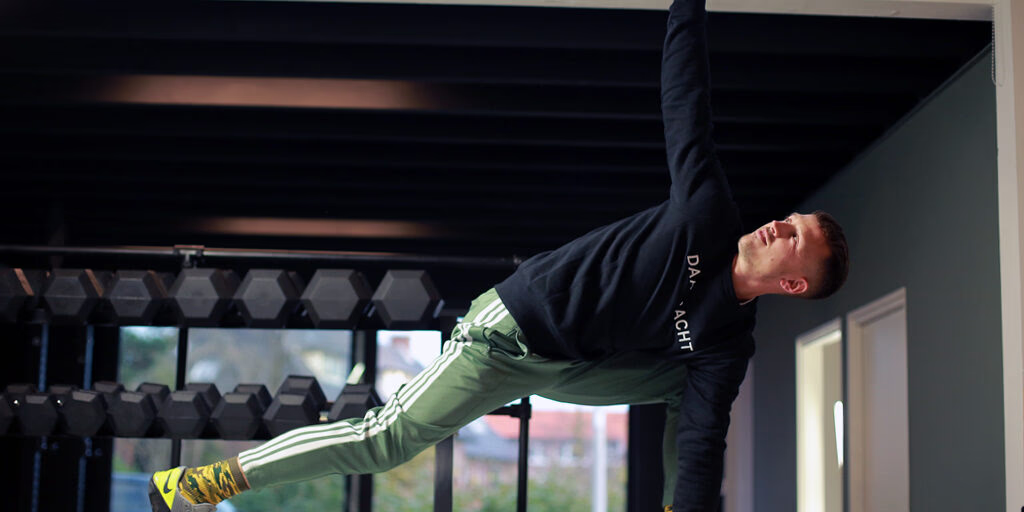
In this article about why cooling down exercises are good for your recovery: Before we delve into the effects of cooling down exercises, we first explain what a cooling down is and what cooling down exercises exist. A cooling down calms your body after physical exertion. You can perform a cooling down in various ways. For instance, you can decrease the intensity of your movements; if you have been running, you might slow down to a walk. You can also transition from physical exertion to gentle movements with stretching exercises to relax your muscles. Additionally, breathing exercises can further support your body in calming down. There are various cooling down exercises from the sports world, but often yoga exercises are also used in a cooling down. Below you will find several examples of cooling down exercises.
This is why cooling down exercises are good for your recovery explained
Examples of cooling down exercises
Slowly walking or jogging after running (the same applies to cycling)
Yoga exercises such as Child Pose and Downward Facing Dog
Mobility exercises such as Active Pigeon and Neck Circles
Breathing exercises such as Boxed Breathing and Down Regulation
Need inspiration? Check out these cooling down exercises.
What is the effect of cooling down exercises?
Not everyone is convinced of the effects of cooling down exercises. Various studies have been conducted on the influence of cooling down exercises on physical recovery after a workout. Some suggest that a good cooling down reduces the risk of injuries and decreases stiffness. However, these results are not widely accepted by researchers. What is generally accepted is that during a workout, your heart rate increases and your body enters an action-oriented state. To function again in daily life after that physical exertion, for example, to work or sleep, your body needs to return to a relaxed state. This is better known as switching between the action-oriented state of the nervous system (sympathetic part) and the relaxed state of the nervous system (parasympathetic part). Cooling down exercises support this process.

A cooling down for stress regulation
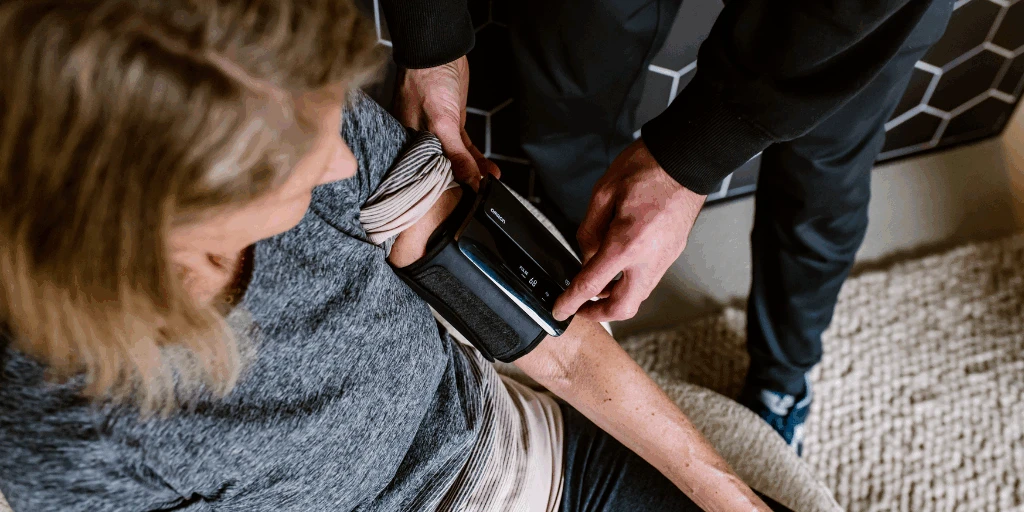
According to science, you don't necessarily have to do cooling down exercises to reduce injuries or improve sports performance. However, doing a cooling down is indeed recommended to regulate your stress levels. During a workout, your heart rate increases and the amount of stress in your body rises. Research shows that a good cooling down helps to bring your heart rate and blood pressure back into balance. In a previous article about heart rate variability, we already shared that stress regulation is important for the heart and thus for all other processes in the body to function optimally. Therefore, a cooling down after a workout is recommended for the recovery of the body.
Why we recommend cooling down exercises
At Daadkracht, we believe in optimal health. This requires a collaboration between training, nutrition, and recovery. You can train hard, but if you don't have good stress regulation, you cannot recover. Just like training to lose weight makes no sense if you don't eat healthily. That's why we look at the complete picture of nutrition, training, and recovery. Curious about the Daadkracht Method? Book a free trial lesson or visit our personal training studio in Haarlem.