

You want to train with weights but don't know how to get started. That's understandable; all the information about strength training for beginners can be overwhelming! These tips will help you get off to a strong start.
What is strength training?
In this article about strength training for beginners, here are 6 tips for a strong start: Let's start at the beginning. Strength training, also known as fitness, is a form of training where you work with resistance. This challenges your body to use your muscles, making you fitter, stronger, and more energetic. It is often thought that you need heavy weights for strength training. But the beauty of strength training for beginners is that you don't need much. It's mainly about adding resistance to your workout, which requires you to exert strength. Think of resistance bands, TRX exercises, bodyweight exercises, or training with dumbbells and fitness machines.
Strength training for beginners: 6 tips for a strong start explained
Who is strength training for beginners for?
Strength training for beginners is suitable for everyone. You can even start strength training at a young age (from 12 years old, for example), but it is important that you know what you are doing or have the right guidance. The earlier you start strength training, the more benefits you will have later in life. A strong body helps you perform daily activities better and supports you in aging healthily.
Strength training for beginners: 6 tips for a strong start

There is a lot of information available about strength training for beginners. It's understandable that you might not know where to start or how to approach it. When you start strength training, there are a few basic principles that will help you begin safely and responsibly.
Focus on good posture
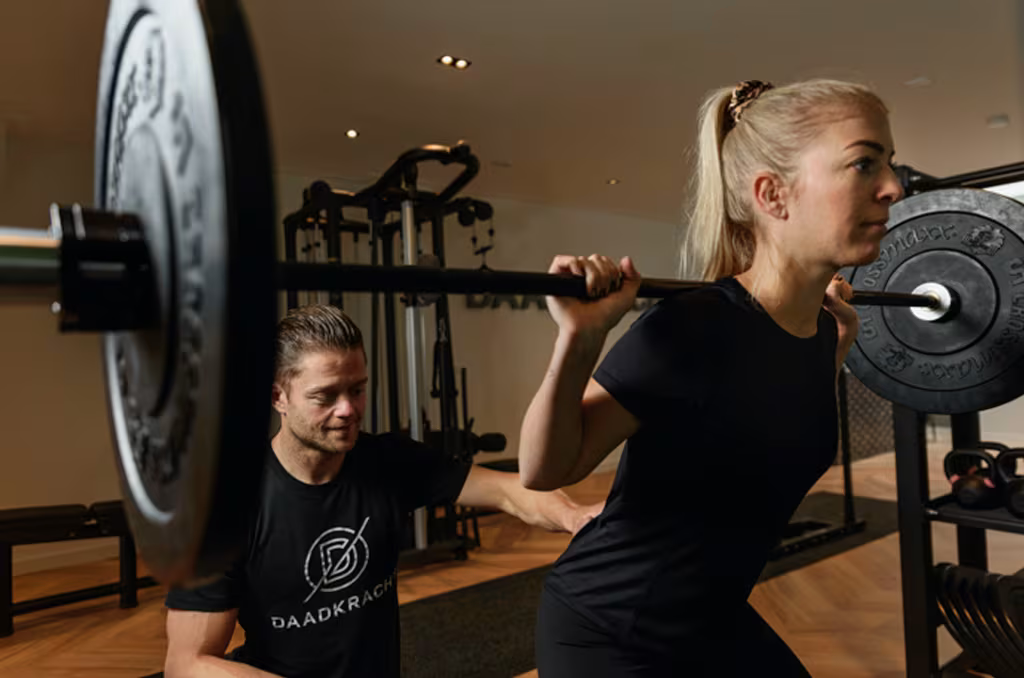
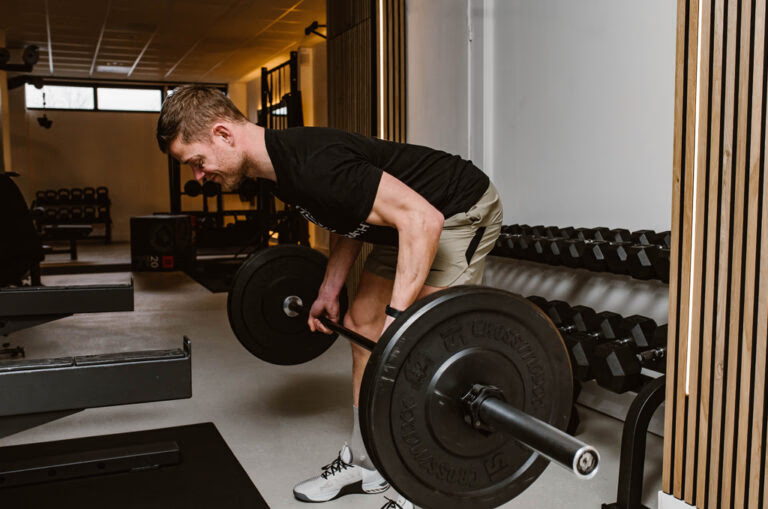
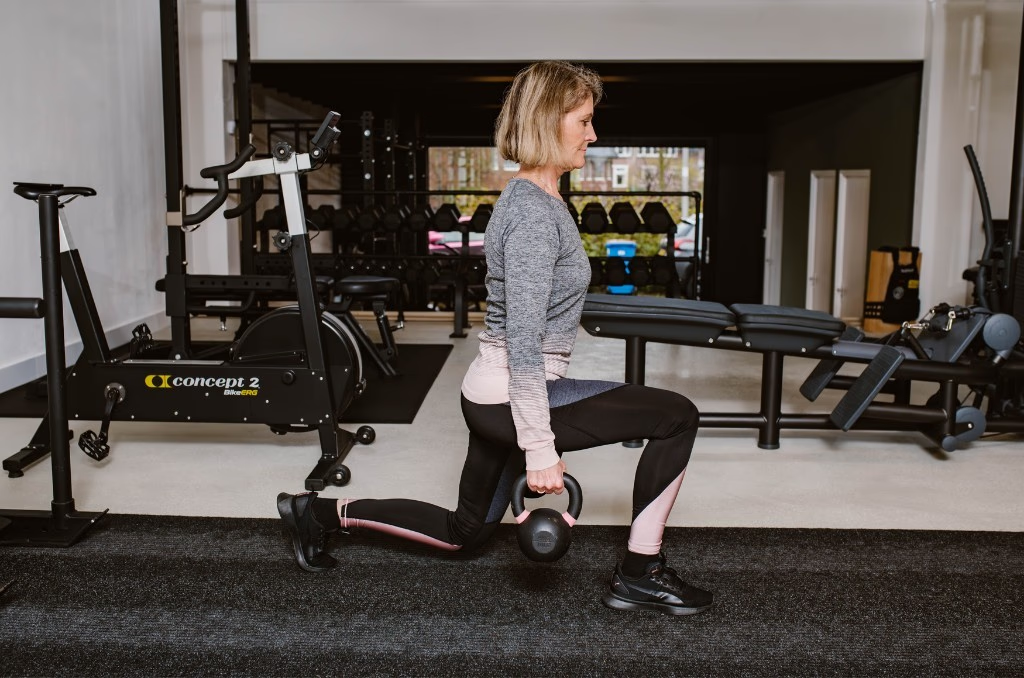
When you start training, the first thing you should focus on is good posture. It is important that you perform the exercises technically well. This not only prevents injuries but also allows you to get the most out of your workouts. When you start with strength training for beginners, it is advisable to first master a few basic exercises. Think of the squat, the deadlift, and the bench press. Watch the videos of these exercises to learn the technique or ask for advice from a trainer at the gym. Once you have mastered the exercises, you can expand with other beginner exercises such as the lunge and the bent over row.
Tip: You can also film yourself so you can see your own posture and progress.
Train with an optimal range of motion
A common mistake in the gym is training without a full range of motion. Examples of a full range of motion (Full ROM) include going to parallel in a squat or touching your chest in a bench press. During a full range of motion, the muscle is optimally stretched under load. This effectively stimulates the muscle you are training and promotes muscle growth. So if you train without Full ROM, you are not fully utilizing the exercise. Additionally, it is important to also perform a safe range of motion. Every body is different, which means your range of motion may differ from someone else's. The flexibility of joints and any injuries also play a role here. It is important to get to know your own body and train with both a full and a safe range of motion.
Consider the number of repetitions
If you are just starting with strength training, the focus is primarily on technique and your body posture. The chances are high that your body is not yet accustomed to heavy strength training. For beginners, we recommend starting with a lower weight and more repetitions. Choose a weight (or another form of resistance) that allows you to perform around 15 repetitions; it should be challenging but not heavy or painful. If you find that you can easily perform 15 repetitions with the chosen weight, you can increase the weight next time. This way, you gradually build up the intensity of the training without overexerting your body.
Be mindful of the intensity of the effort
Not only in strength training for beginners, but in strength training in general, it is important to find the right intensity. You want to sufficiently stimulate your muscles so that the muscle fibers are engaged, but you also do not want to overstimulate your muscles. In certain cases, you can train to muscle failure, which means you can no longer complete the last repetition fully. We recommend not letting it get that far in strength training for beginners. Look for an intensity where the last repetition is about 1-3 repetitions away from muscle failure. This may take some searching and requires getting to know your body. This is important, as it allows you to conserve more strength and energy to focus on the technique of the exercise.
Select your exercises carefully
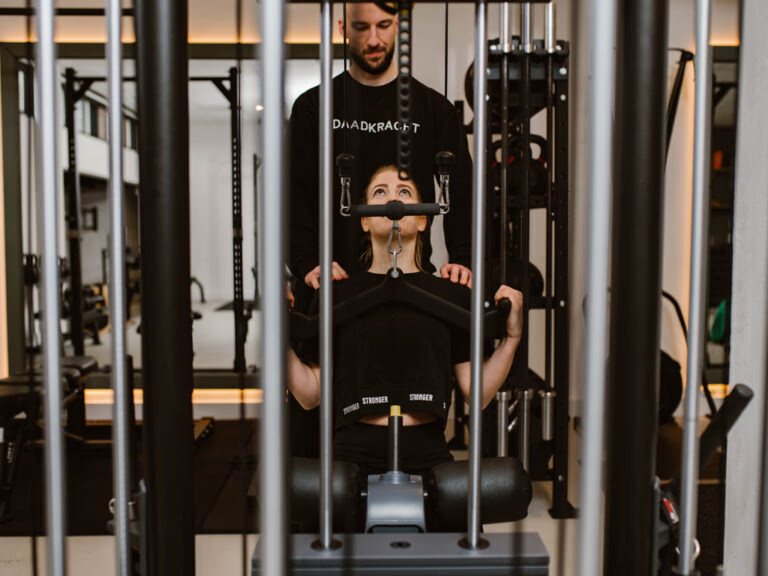
Another tip for a strong start is to choose your exercises carefully. You want to train your entire body so that your whole body becomes stronger. This means doing exercises for both your glutes and legs, as well as for your upper body. There is also a difference in the direction of movement. There are exercises with a pushing motion and exercises with a pulling motion. You can choose to train your whole body each time or to work with a so-called split routine, where you train a different part of your body per session. For beginners, we recommend starting with, for example, two workouts per week where you train the entire body. If you have trouble choosing the right exercises, ask for help at your gym or from a trainer so that you have a varied training schedule.
Ensure adequate recovery time
With strength training, you increase the load on your muscles, which actually causes damage to the muscle fibers. In response, your body produces muscle proteins to repair these damaged muscle fibers. Through this process, your muscles become stronger and more powerful. This means that your body needs recovery time after strength training. How much time your body needs to recover optimally varies from person to person. If you are just starting with strength training, it may very well be that your body needs a bit more time to recover. This form of stress is new for the body, and it takes a bit more time to adapt to it. So listen carefully to your body, give it enough rest and nutrition, and resume training when you have sufficiently recovered.
Strength training for beginners
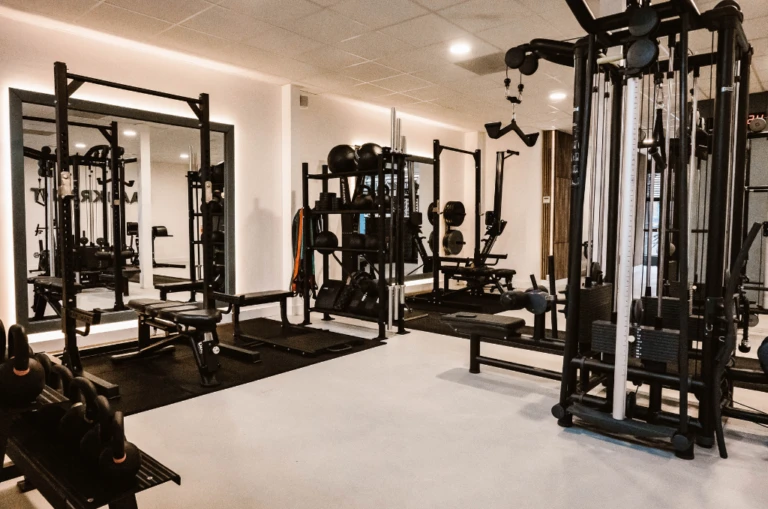
All in all, strength training for beginners mainly requires you to get to know your own body. Focus primarily on the technique of the exercises and good body posture. Gradually build up with more repetitions and a slightly lower weight, but do look for an intensity that sufficiently stimulates your muscles. Train your entire body with a varied training schedule and take into account the recovery time of your muscles. These are the most important tips for a strong start in strength training for beginners. Need help choosing the right exercises or performing the technique? Visit our studios in Overveen or Heemstede. With personal guidance, you will get the most out of your strength training.