

Squats are one of the most popular and effective strength exercises. However, performing a squat correctly is not that simple. In this article, you will read everything about this compound exercise.
What is a squat?
In this article about squats, everything you need to know: A squat is an exercise that trains multiple muscle groups simultaneously. The basic movement consists of bending your knees and moving your hips back, as if you are about to sit on an imaginary chair. As you lower yourself, keep your chest up and your back straight. Then, you straighten your legs to return to a standing position.
Everything you need to know about squats explained
What are the benefits of squats?
Squats are among the most fundamental and effective exercises in the fitness world. They not only strengthen your legs and glutes but also help improve your core stability, balance, and overall strength. Whether you are a beginner at the gym or an experienced athlete, squats are an essential part of any training program. Here are some proven benefits of squats:
Strength building: Squats activate large muscle groups such as the quadriceps, hamstrings, and glutes. By regularly training these muscles, you build strength, which not only helps with other exercises but also in daily life, such as lifting and climbing stairs.
Improved core stability: During a squat, your core (the muscles around your abdomen and lower back) is heavily engaged to keep your body balanced. This strengthens your core, which is essential for good posture and injury prevention.
Functional movement: Squats mimic a natural movement that we use daily, such as standing up from a chair or squatting to pick something up from the ground. By training squats, you improve your overall functional strength.
Calorie burning: Because squats engage large muscle groups, they burn more calories than smaller isolation exercises. This makes squats an excellent choice for those looking to lose weight or boost their metabolism.
Improved flexibility: Regular squatting helps improve the flexibility of your hips, ankles, and lower back. This can lead to better posture and a reduced risk of injuries.
Different types of squats
You may have noticed that there are different types of squats. You can perform squats using just your body weight, with a kettlebell or dumbbell, and even jumping. There are many variations of squats that target different muscle groups and fitness levels:
Bodyweight Squat: This is the basic form of the squat where you use no extra weight. Perfect for beginners to master the technique.
Goblet Squat: In this variation, you hold a kettlebell or dumbbell close to your chest. This variant helps you keep your torso upright and improves the depth of your squat.
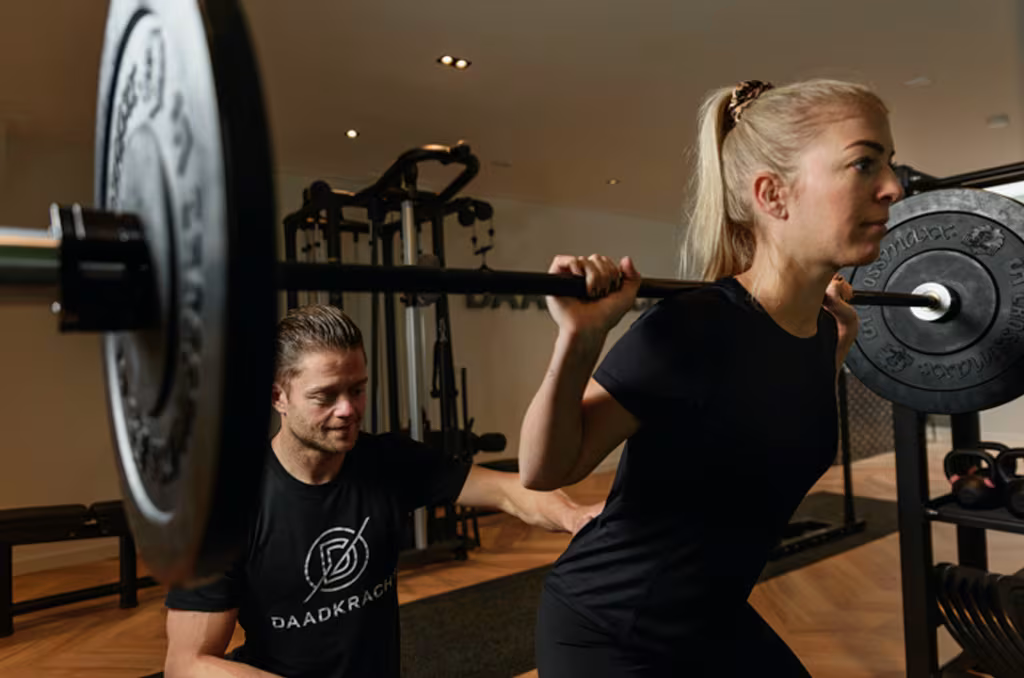
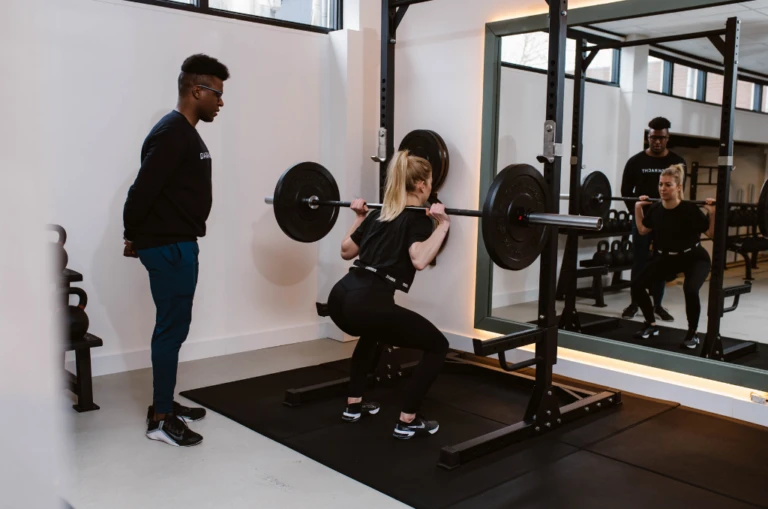
Back Squat: This is one of the most popular forms where you place a barbell on your upper back. It is an excellent exercise for building strength, especially in the quadriceps and glutes.
Front Squat: Instead of resting the barbell on your back, in a front squat it rests on your shoulders at the front. This places more emphasis on your quadriceps and core and helps improve posture.
Jump Squat: A dynamic variation where you explosively jump out of the squat. This exercise is great for improving your explosive strength and conditioning.
The right squat technique
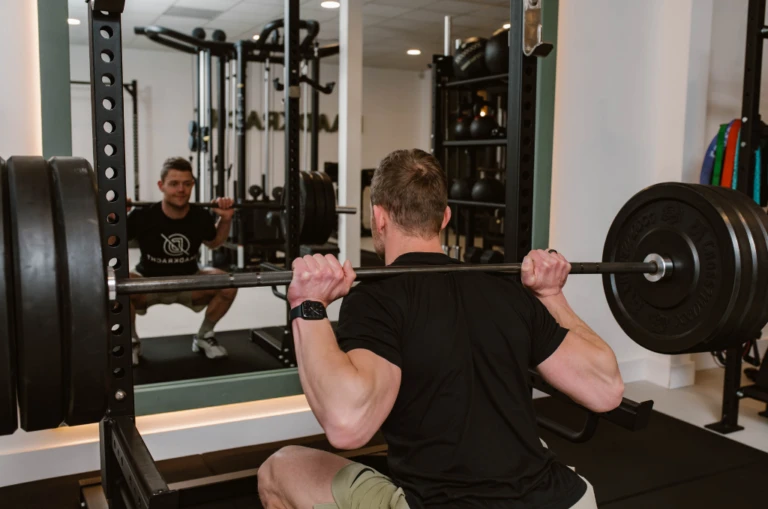
Performing a squat correctly is crucial to prevent injuries and get the most out of the exercise. These steps help with proper execution:
Starting position: Stand with your feet hip-width apart, toes slightly pointed outward. Keep your chest up and pull your shoulder blades back.
Movement down: Bend your knees and hips as if you are going to sit on a chair. Keep your weight on your heels and ensure your knees do not go past your toes. Your back should remain neutral and your chest up.
Lowest position: Lower yourself until your thighs are at least parallel to the floor. The deeper you squat, the more you engage your glutes and hamstrings, but make sure your technique does not deteriorate.
Upward movement: Push yourself back up by pressing your heels into the ground and straightening your legs. Keep your core engaged and ensure your upper body remains upright.
Common mistakes in squats
While it is advisable to add squats to your training program, mistakes are often made during execution that can lead to injuries or ineffective workouts. Here are some common mistakes when performing squats:
Rounded back: One of the most common mistakes is bending the back during squatting, which can lead to back pain. Make sure to actively engage your core and keep your back neutral.
Knees caving in: This is also known as 'valgus collapse' and can put strain on your knees. Focus on pushing your knees outward during the movement.
Not squatting deep enough: Many people stop the squat too early, which prevents them from fully benefiting from the exercise. Always try to lower yourself at least to parallel (or deeper if your mobility allows) and achieve the full range of motion.
Squats in your training routine
Whether you train at home or in the gym, you can easily integrate squats into your training routine. For beginners, it is advisable to start with bodyweight squats and gradually progress to weighted variations, such as the goblet squat or the back squat. Add squats to your program as part of a strength training or leg day, and vary the types of squats to target different muscle groups.
Squats at Daadkracht
Squats are one of the most effective exercises you can do to build strength, stability, and mobility. By incorporating different variations into your routine and optimizing your technique, you can benefit from the advantages of this versatile exercise. Whether you want to get stronger, lose weight, or simply improve your overall fitness, squats are a solid foundational exercise to work with. Need help? Book a free trial lesson at our studio in Overveen or Heemstede and work under the professional guidance of a personal trainer on your fitness goals.