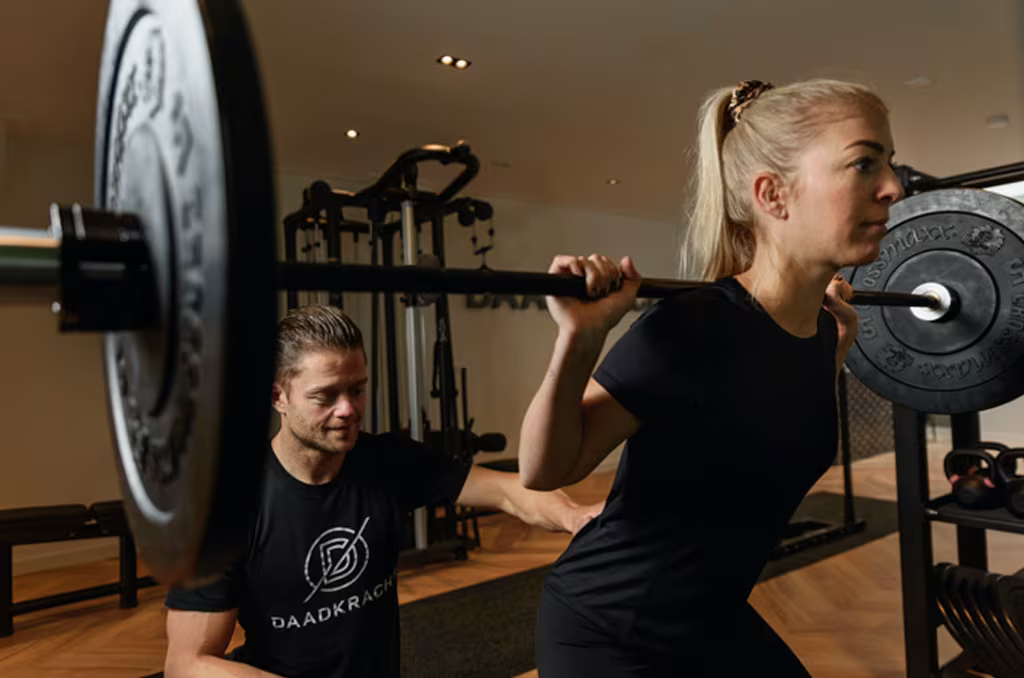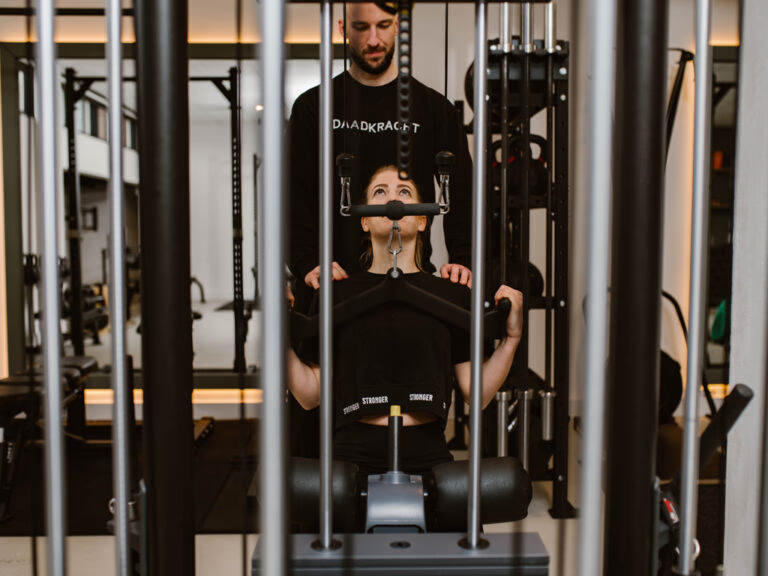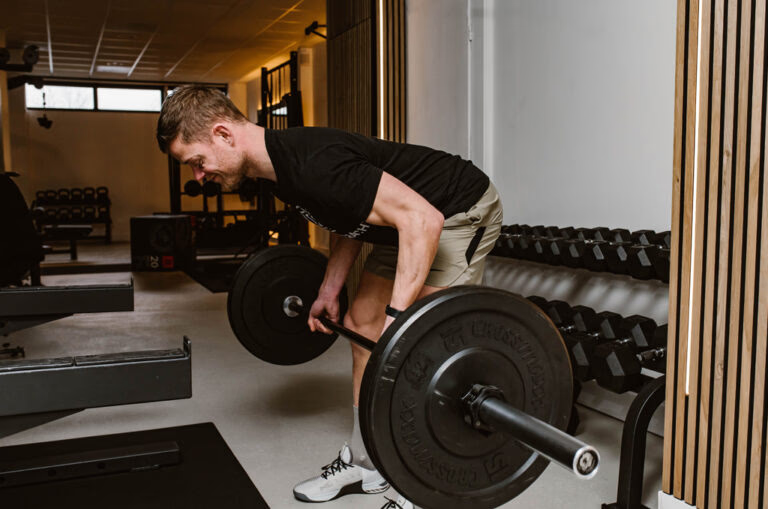


In this article about leg training, the ultimate exercises: Never skip leg day. Whether you exercise or not, you've probably heard it before. And the saying is true. Your leg muscles are some of the largest and most important muscle groups you have. That's why we tell you everything about leg training in this article.
Leg training the ultimate exercises explained
Why are strong legs important?
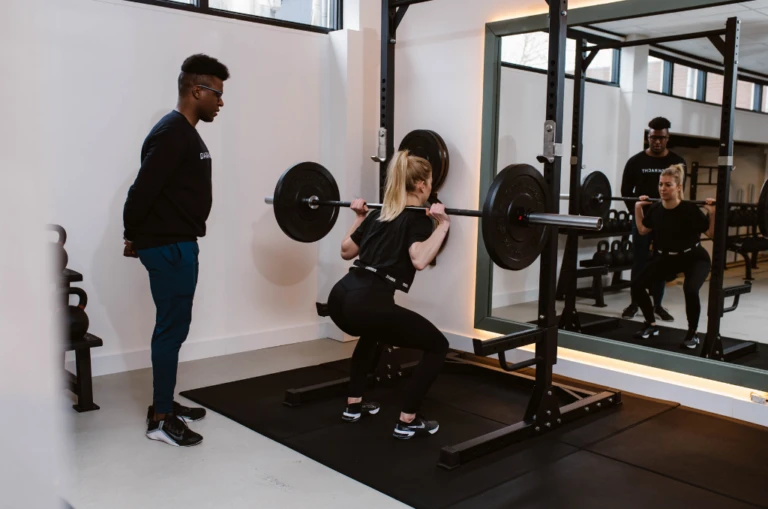
The function of strong leg muscles
Strong leg muscles are the foundation of our body. They help with walking, running, jumping, and balancing. Moreover, they contribute to our overall physical health and well-being. As we explained in our blog about strength training, muscle mass is directly related to a longer life expectancy.
Strong legs influence sports performance
It should come as no surprise that strong leg muscles help with your sports performance. With strong muscles, you can create more explosiveness, which aids you in most sports. Additionally, extra endurance is also beneficial.
Since humans started walking on two legs, they may have become the most important muscles in our body. Whether during sports or in daily life.
Health benefits of strong legs
Training your legs has many health benefits. It improves your circulation, strengthens your bones, and lowers your risk of injuries. So never skip leg training.
Leg exercises at home: get the most out of your home training
Benefits of training your legs at home
Training your legs at home is a great way to stay fit. You don't need expensive equipment, and you can train at your own pace. There are plenty of exercises you can do at home to get started.
Different home exercises for leg training
There are numerous exercises you can do at home to train your legs. Think of:
Each of these exercises targets different parts of your legs and helps build muscle strength and endurance.
Safe leg training at home
To prevent injuries, it's important to use good form and technique while training your legs. The videos above explain several exercises. Follow the instructions and don't train too intensely yet. Take enough rest between repetitions and only increase intensity when you're ready.
Exercises for the glutes

The importance of strong glute muscles
Many people train their glute muscles because they are considered attractive, but did you know they also play an important role in your body? They stabilize your body and reduce strain on your lower back. The fact that you can walk, run, jump, sprint, and even sit without back pain is all thanks to your glute muscles.
Yet for many of us, the glute muscles are underdeveloped. This is because we sit for at least 8 hours a day. That's far too much. Additionally, we hardly use our glute muscles, and they then 'forget' how to stabilize the body at other times. This leads to back pain and other complaints.
So don't forget to pay attention to your glutes while working out.
Example exercises for the glute muscles
To strengthen your glute muscles, there are several exercises you can do:
Squats
Lunges
By doing these exercises, you'll quickly notice that you move more smoothly and have less trouble with activities like climbing stairs.
How do you get bigger glutes?
This is a question we often receive. And we always give the same answer: By training your entire body. Your glute muscles are not an isolated muscle group. They play an important role in the functioning of your whole body. Training only your glute muscles is of little use. Therefore, focus on your entire body, and you'll notice that your glutes will grow naturally.
How not to train your glute muscles
One of the most common myths about getting stronger glute muscles is that you only need to do squats. The reality is a bit different. Yes, squats help you build stronger glute muscles. But this is especially effective when combined with various exercises, good nutrition, and consistency.
The importance of nutrition in building muscle mass
You cannot build muscle without the right nutrition. Make sure you consume enough proteins, complex carbohydrates, and healthy fats to nourish your body and help your muscles grow. You can read more about nutrition in our blog on nutritional advice.
Knee exercises: keep your knees strong and healthy
You need strong knees
Just like your glute muscles, your knees also suffer from the excessive sitting we do nowadays. And yet strong knees are essential for almost every physical activity. Without your knees, you wouldn't be able to move your legs, and walking would be quite difficult.
Knee injuries often occur, causing people to derive less enjoyment from moving. This is a result of too little movement and other unhealthy habits. Fortunately, this means we can prevent knee pain.
Prevent knee injuries through movement
By training your legs a lot, the muscles around your knees become stronger, reducing the risk of injuries. Dynamic exercises often work best in this regard. Think of walking backward while pulling a sled with weights. This exercise is a real workout for your knees.
Which muscles do you use during lunges?
We've mentioned lunges a few times, but which leg muscles do you actually train with lunges?

Anatomy of a lunge
During a lunge exercise, you use various muscles. Almost every muscle in your lower body is engaged, including:
So it's a good exercise for your legs. Try it during your next workout.
Different lunge variations to try
There are various lunge variations you can try, such as the forward lunge, reverse lunge, walking lunge, and lateral lunge. Each variant trains the leg muscles in a slightly different way.
Conclusion
After reading this blog, you know that training your legs is very important. By training your legs and glutes, you experience many benefits, such as improving your overall health, performance, and posture. The next time you go to the gym, try an extra set of one of the exercises we've mentioned.
Want to train your legs under the guidance of a professional? Daadkracht offers personal training in Haarlem. We have already helped many people achieve their health goals and look their best physically. Do you want to experience that too? Then contact us.