

In this article about exercising during your pregnancy, here’s what you need to know: Can you exercise during your pregnancy? Which exercises are safe to do and which ones should you skip? And what about exercising in the different trimesters? When you are pregnant, a lot changes in your life and in your body. It’s natural to have questions! We will explain everything about exercising while expecting.
Exercising during your pregnancy: what you need to know explained
Exercising during your pregnancy: why is it important?
Congratulations, you are pregnant! This may be your first pregnancy and a new phase is beginning. Or you may have been pregnant before and already have a family. Whatever your situation, exercising during your pregnancy can help you stay physically and mentally healthy.
Good for both mother and baby
Exercising during your pregnancy is important for both mother and baby, provided it is done in a safe and responsible manner. By continuing to exercise, you stimulate your physical health. This contributes to a healthy weight, reduces discomforts such as back pain, and promotes healthy circulation. Additionally, you prepare your body for childbirth, which is also a physical challenge.
The benefits of exercising during your pregnancy
Exercising during your pregnancy not only has physical benefits but also supports you in other areas. Here are the benefits of exercising during your pregnancy:
Physical health: physical activity promotes the overall physical health of the mother. It helps maintain a healthy weight, reduces back pain and swelling, and improves circulation.
Reduction of pregnancy ailments: regular physical activity helps reduce common pregnancy ailments such as constipation, fatigue, and mood swings.
Improvement of mental health: it has been proven that exercising can improve mood and reduce stress. This can be especially beneficial during pregnancy, as hormonal changes can lead to mood swings.
Preparation for childbirth: regular exercise can increase the mother’s strength and endurance, which can contribute to a smoother delivery. It can also help in learning breathing techniques that are useful during childbirth.
Improved sleep quality: exercising contributes to better sleep quality, which is very important during pregnancy due to the fatigue and sleep disturbances that can occur.
Faster recovery after childbirth: women who remain active during pregnancy often have a quicker recovery after childbirth. Maintaining good physical condition can help with muscle recovery and regaining strength after childbirth.
Here you can read more about the proven benefits of exercising during your pregnancy
Which sports can you do during your pregnancy?
Not all forms of exercise are suitable to continue during your pregnancy. Choosing the right type of training also depends on your sports history. For example, if you have never run before, it is not wise to suddenly start running during your pregnancy. Which sports can you do during your pregnancy? We are happy to help you make the right choice.
Different forms of training for pregnant women

During your pregnancy, it is important to choose physical activities that are safe for both you and the baby. There are specific programs for pregnant women such as pregnancy yoga, pregnancy swimming, or pregnancy training. These programs are specifically designed for pregnant women, and you can expect to receive the right guidance here. For general classes or training, it is advisable to consult with the instructor or trainer to ensure you can move safely and responsibly. You can generally do the following forms of training while pregnant:
Walking: Walking is an excellent low-impact activity that almost every pregnant woman can do. It is good for your cardiovascular health and can help you stay fit without putting excessive stress on your joints.
Swimming: Swimming is a great option because it supports your weight and reduces pressure on your joints. It is beneficial for overall fitness, muscle strength, and flexibility.
Yoga: Pregnancy yoga offers exercises and poses that are specifically adapted to the changing needs of your body during pregnancy. It can help improve flexibility, balance, and breathing.
Pilates: Pregnancy Pilates focuses on strengthening the core muscles, which can contribute to better posture and stability. Be sure to choose Pilates exercises that are suitable for pregnant women.
Cycling on a stationary bike: Cycling on a stationary bike can be a safe and effective cardiovascular activity during pregnancy, as it has minimal impact on your joints.
Low-impact aerobics: Some low-impact aerobics classes may be suitable, as long as they are adapted for pregnancy and do not cause excessive strain.
Strength training: Moderate strength training with light weights can help maintain muscle strength and tone. Make sure to use the correct technique and avoid exercises that put pressure on your abdominal muscles.
How to choose the right form of training during your pregnancy
When choosing a form of training to take up during your pregnancy, keep the following advice in mind. Avoid high-impact sports, contact sports, and activities with an increased risk of falling or injury. Especially after the first trimester, you should also skip activities that require you to lie flat or on your back for extended periods.
Furthermore, it is important to realize that every pregnancy is different. It is wise to seek advice from others, but also listen closely to your own body. You recognize the signals from your body best. If in doubt, contact your doctor or midwife before starting a particular training program.
What are the do’s and don’ts of exercising during your pregnancy?
You now have a good understanding of the importance of exercising during your pregnancy, the benefits of working out while expecting, and the types of training available for pregnant women. There are a number of general rules and advice that pregnant women can keep in mind. Below we list the do’s and don’ts.
The do’s of exercising during your pregnancy
Stay active: whatever form of exercise you choose, staying active supports you on a physical, mental, and emotional level during this special time.
Listen to your body: get good advice but also pay attention to the signals from your body. Train within your own limits.
Focus on improving your breathing and strengthening your pelvis and core: these areas need extra attention during pregnancy and childbirth.
The don’ts of exercising during your pregnancy
Do not start a new form of exercise or a sport you have never done before during your pregnancy.
Avoid high-risk sports and do not train your rectus abdominis after the first trimester.
Preferably avoid high-intensity workouts or very heavy weights.
What are the benefits of strength training during your pregnancy?
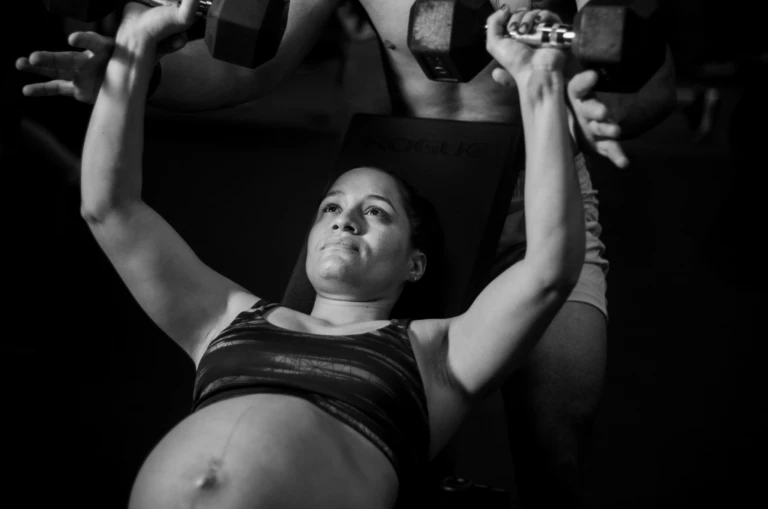
Of all the forms of exercise we mentioned, strength training during your pregnancy is, in our opinion, one of the best ways to keep your body and mind healthy and prepare for childbirth.
Benefits of strength training during your pregnancy
Strength training has many benefits, even if you are not pregnant. As we wrote in an article about strength training for women, strength training helps women improve bone density, reduce injury, and promote a healthy and strong body.
These are the benefits of strength training during your pregnancy:
Improved muscle strength and endurance: Strength training helps maintain or improve the muscle strength and endurance of the major muscle groups. This helps reduce fatigue and makes daily activities easier to sustain.
Reduction of back pain: Strength training leads to stronger back and core muscles, which can help reduce or prevent back pain – a common discomfort during pregnancy.
Management of weight gain: Strength training helps maintain a healthy weight during pregnancy.
Improved posture and balance: Strength training contributes to better body posture and balance, which is especially important as the pregnancy progresses and the body's center of gravity changes.
Reduced risk of gestational diabetes: According to several studies, strength training can reduce the risk of developing gestational diabetes.
Preparation for childbirth: Strength training can help strengthen the muscles used during childbirth.
Training with a personal trainer during your pregnancy
Are you pregnant and want to keep training? At Daadkracht, we are happy to help you train safely and responsibly during your pregnancy. Contact us for a trial lesson so we can assess your personal situation and create a plan of action.
Strength training after your delivery
Have you given birth and want to resume strength training? This also has many benefits for your recovery, fitness, and mental health. However, after your delivery, it is extremely important to listen to the signals from your body. In the first weeks, your body primarily needs rest. After 6 to 8 weeks – depending on how you gave birth – you can slowly start with strength training again. It is important to first focus on building your fitness and strengthening your core. This way, you can prevent injuries or worsening issues such as diastasis, prolapses, or incontinence.
Want to know more? Here you can read everything about strength training after your delivery.
Training with a personal trainer during your pregnancy & afterwards
Are you pregnant and want to keep training? Or have you given birth and want to resume training? At Daadkracht, we are happy to help you train safely and responsibly during your pregnancy and after your delivery. Contact us for a trial lesson so we can assess your personal situation and create a plan of action.