

The deadlift is a popular strength exercise and not without reason. By performing deadlifts, you train multiple muscle groups simultaneously. However, choosing the type of deadlift or executing the exercise correctly can be quite challenging. In this article, you will learn everything about this compound exercise.
What is a deadlift?
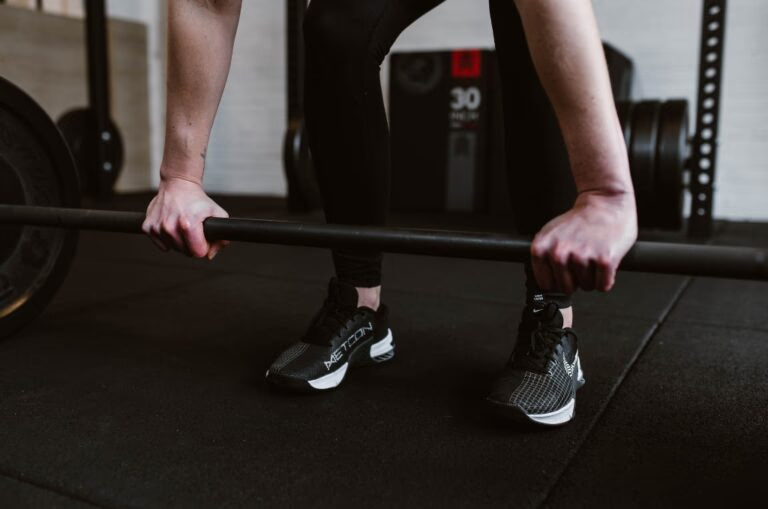
In this article about deadlifts, everything you need to know: A deadlift is a strength exercise where you lift a weight from the ground to hip height, primarily with a straight back and extended arms. It is one of the basic exercises in strength training and bodybuilding and targets multiple muscle groups at once, such as the lower back, hamstrings, glutes, quadriceps, and the core (abdominal and back muscles).
Deadlifts everything you need to know explained
What are the benefits of deadlifts?
Performing deadlifts is definitely a good idea if you are starting with strength training, but even if you have been training for a while, this exercise should not be missed. Deadlifts are one of the most effective compound exercises and offer a wide range of benefits for strength, stability, and overall fitness. Here are the main benefits:
Strengthening large muscle groups: By performing deadlifts, you strengthen various important muscle groups simultaneously. You train the muscles along your spine, as well as the smaller upper and lower back muscles. In terms of leg muscles, you train your quadriceps, hamstrings, and glutes. And with a deadlift, you also activate your abdominal muscles for a strong core.
Improvement of functional strength: Deadlifts mimic everyday movements such as picking up heavy objects like grocery bags. This strengthens the entire body, allowing you to develop more strength and stability for daily activities and situations.
Promotion of posture and stability: Regularly performing deadlifts helps to develop better posture by strengthening the core and back muscles. This corrects imbalances in the body and improves your overall body control.
Improved sports performance: Deadlifts enhance explosive strength, which is useful for sports such as sprinting, soccer, and basketball. Thus, by performing deadlifts, you not only strengthen your muscles but also improve your speed, jumping ability, and overall physical performance.
Versatility: Deadlifts have various variants such as sumo deadlifts, Romanian deadlifts, and trap bar deadlifts, allowing you to target specific muscles or goals. This is a significant advantage of this functional strength exercise as it makes it suitable for strength training, muscle growth, and even rehabilitation.
Different types of deadlifts
In mentioning the versatility as an advantage of deadlifts, we already noted several variants. By knowing the different variants, you can ensure variety and also tailor your training to a specific goal. At the same time, it can be challenging to choose the right variant without losing sight of proper technique. Here you will find the main types of deadlifts listed:
1. Conventional Deadlift
Description: This is the standard deadlift where your feet are hip-width apart and your grip is outside your knees. You lift the bar from your hips all the way to the ground and back.
Goal: Focus on the back, hamstrings, glutes, and grip strength.
Suitable for: General strength building and beginners.
2. Romanian Deadlift (RDL)
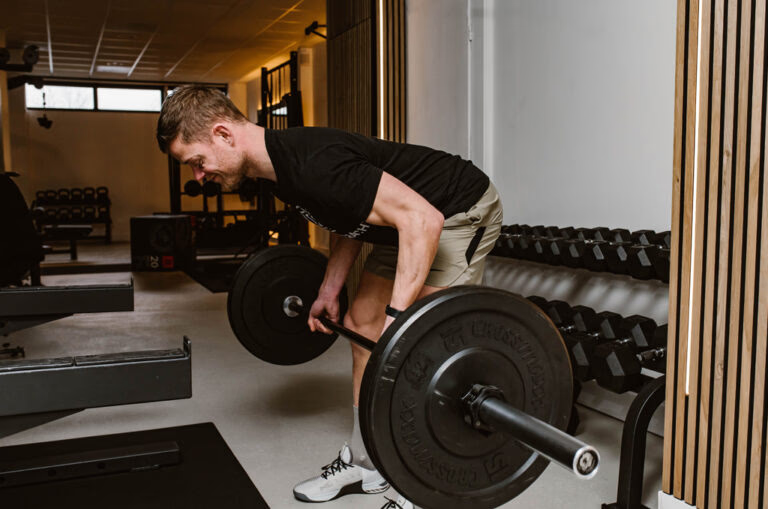
Description: You start standing, lowering the barbell just below your knees with a straight back and a slight bend in the knees. Then you bring the barbell back to your hips.
Goal: Strengthening the hamstrings, glutes, and lower back. Less emphasis on heavy weights.
Suitable for: Muscle isolation and flexibility improvement.
3. Sumo Deadlift
Description: In this variant, your feet are wide apart (like a sumo wrestler) and your grip is inside your knees.
Goal: Less strain on the lower back. More focus on the quadriceps and glutes.
Suitable for: People with mobility limitations or long legs.
4. Stiff-Leg Deadlift
Description: Similar to the Romanian Deadlift, but you keep your legs almost straight during the exercise.
Goal: Isolate the hamstrings and glutes, with less emphasis on the knees.
Suitable for: Improving hamstring strength and flexibility.
5. Trap Bar Deadlift (Hex Bar Deadlift)
Description: Performed with a hexagonal bar (trap bar), where you stand inside the bar and grab the handles.
Goal: Less strain on the lower back and more focus on the quadriceps.
Suitable for: Beginners, people with back issues, or as an alternative to traditional deadlifts.
6. Single-Leg Deadlift
Description: You perform the exercise on one leg, usually with a dumbbell or kettlebell.
Goal: Balance, core stability, and isolation of one side of the glutes and hamstrings.
Suitable for: Functional strength and correcting muscle imbalances.
The choice of deadlift depends on your goals, experience, and any limitations. Beginners can start with the Conventional Deadlift or Trap Bar Deadlift, while advanced athletes can also benefit from the other variants to address specific weaknesses.
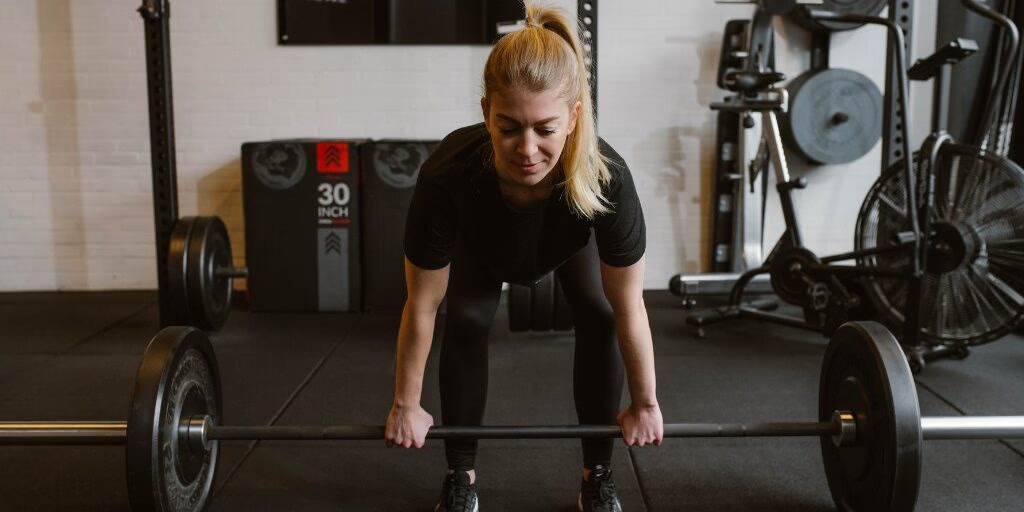
How to Avoid Common Mistakes in Deadlifts
Deadlifts are technically challenging exercises that can significantly increase the risk of injury if performed incorrectly. Here are common mistakes in deadlifts and how to avoid them:
1. Rounded Back During the Lift
Problem: A curved or rounded back puts unnecessary pressure on the spine and increases the risk of back injuries.
Solution: Keep your back neutral throughout the movement. Engage your core and slightly pull your shoulder blades back. Practice first with a light bar or PVC pipe to learn the correct back position.
2. Too fast or jerky movement
Problem: "Jerking" the barbell to use momentum reduces control and can cause injuries.
Solution: Use controlled movements, especially in the initial phase of the lift. Pull slowly on the bar and build tension before lifting.
3. Hips rising too early
Problem: Hips rise faster than the shoulders, placing more stress on the lower back.
Solution: Ensure your hips and shoulders move up simultaneously. Focus on using your legs to initiate the movement, not just your back.
4. Bar too far from the body
Problem: If the barbell does not stay close to your body, the leverage increases, causing extra strain on the lower back.
Solution: Keep the bar as close to your shins as possible throughout the movement. Pull the bar towards you with your back muscles before you start lifting.
5. Poor starting position
Problem: The feet, hips, or shoulders are not in the correct position, leading to an inefficient and dangerous lift.
Solution: Position your feet shoulder-width apart (for Conventional Deadlift). Place the barbell above the middle of your feet. Keep your shoulders just above or slightly in front of the bar.
6. Overextension at the top
Problem: Leaning too far back or overextending the back when completing the lift.
Solution: Stop as soon as you are upright with your hips fully forward. Keep your back and core engaged to maintain stability.
7. Lifting too much weight
Problem: Poor technique due to using weights that are too heavy for your level.
Solution: Reduce the weight and perfect your technique first. Gradually increase to prevent injuries.
8. No tension in the core
Problem: Not engaging the abdominal muscles can lead to instability and pressure on the lower back.
Solution: Engage your core as if you are trying to brace for a punch to your stomach. Use the Valsalva maneuver (breathe deeply and hold your breath during the lift) to maintain tension.
Deadlifts in your training schedule
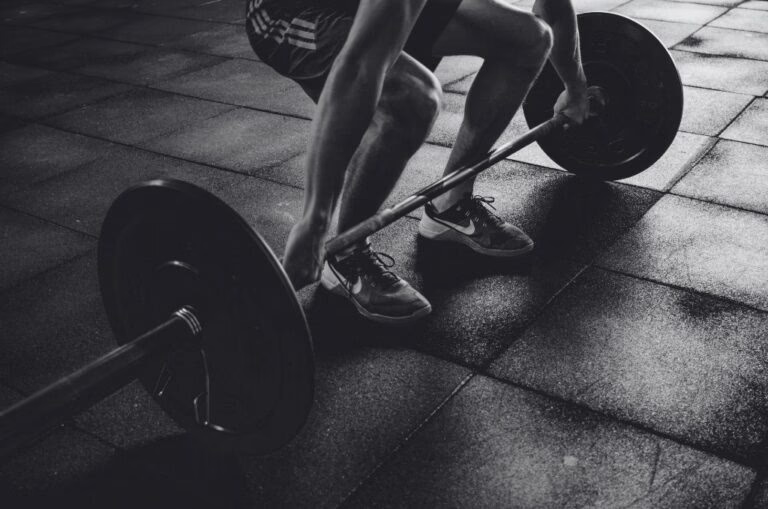
Whether you train at home or in the gym, you can easily integrate deadlifts into your training routine. First, make sure you know and master the correct technique of a deadlift variation. You can practice this with a light PVC pipe. Then, gradually increase the weight so that your technique does not suffer from the amount of weight. Once you have mastered the standard deadlift, you can try other variations, depending on your goal.
Deadlifts at Daadkracht
Deadlifts are an essential part of your training schedule, so make sure to include them to target different muscle groups and enhance your overall strength, stability, and fitness. By incorporating this strength exercise into your routine and continuously optimizing your technique, you will benefit from the advantages of this versatile exercise. Whether you want to get stronger, lose weight, or simply improve your overall fitness, deadlifts are a solid foundational exercise to work with. Need help? Book a free trial lesson at our studio in Overveen or Heemstede and work towards your fitness goals under the professional guidance of a personal trainer.