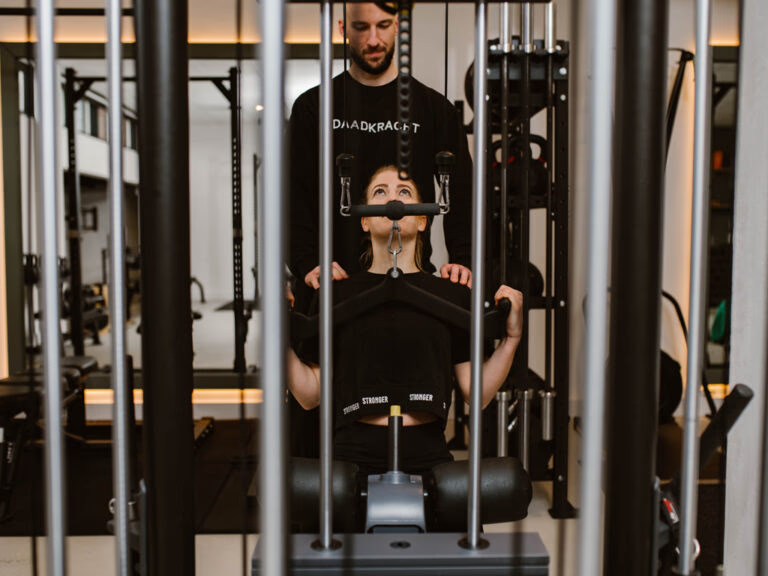


In this article about bench pressing, everything you need to know: When you think of bench pressing, you might picture that big strong man in the gym pushing a barbell full of weights with a lot of noise. But this exercise is suitable for almost anyone who does strength training. In fact, it is one of the most popular compound exercises that belongs in a comprehensive training program.
Bench pressing everything you need to know explained

What is bench pressing?
Bench pressing, also known as bench press, is a strength exercise where you push a barbell with weights up from your chest while lying on a bench. It is one of the most popular and effective exercises for building strength and muscle mass, especially in the chest muscles (pectoralis major), triceps, and shoulders.
What are the benefits of bench pressing?
Bench pressing has many benefits, especially if you want to make your upper body stronger and more muscular. Here are the main benefits of bench pressing:
1. More strength in your upper body
Bench pressing primarily targets the large chest muscle (pectoralis major), which results in a wider and fuller chest. Your triceps (triceps brachii) and front shoulder muscles (anterior deltoid) are intensively trained, which helps with other pushing movements. Bench pressing is one of the three major strength exercises in powerlifting (alongside squats and deadlifts) and helps develop functional strength. You can use this well when pushing or lifting heavy objects.
2. Stronger bones and joints in your upper body
Bench pressing also contributes to strengthening your bones. It increases bone density, which can help prevent conditions such as osteoporosis. Additionally, it strengthens your joints, particularly the shoulders and elbows, by training the tendons and ligaments in those areas. This provides better stability and reduces the risk of injuries in other physical activities.
3. Increased muscle mass and burning
What is a well-known benefit of strength training is that by increasing muscle mass, fat burning is also enhanced. Although bench pressing is primarily a muscle-building exercise, it boosts metabolism as muscles are stimulated and grow, causing them to burn more calories, even at rest.
4. Many variations within bench pressing
Bench pressing is an exercise that you can vary in many ways. Besides the traditional flat bench press where you lie on a bench, you can work with incline or decline benches, or even with dumbbells instead of a barbell. These variations ensure that you train different parts of your chest and arms and prevent you from hitting a plateau. Moreover, you can progressively overload the exercise by continually increasing the weight, which helps with consistent strength gain and muscle growth.
Bench Press: Different Bench Press Variations
There are various bench press variations, each with its own focus and benefits. Here are the main variants and what you specifically train with the exercise:
1. Flat Bench Press (Standard Variant)
This is the classic execution where you lie on a flat bench and lower the barbell to your chest and push it back up. This variant targets the entire chest muscle (pectoralis major), the triceps, and the front shoulder muscles (deltoideus anterior).
2. Incline Bench Press (Inclined Variant)
In this variant, the bench is set at an angle of about 30-45 degrees upward. This places more emphasis on the upper part of the chest muscles and the shoulders. This is a good choice if you want to develop a fuller upper chest.
3. Decline Bench Press (Declined Variant)
Here, the bench is set at a downward angle, which puts more pressure on the lower part of your chest. This can help in developing a fuller chest and may also be less taxing on the shoulders.
4. Close-Grip Bench Press (Narrow Grip Variant)
By placing your hands closer together on the bar, the focus shifts more to the triceps and the front of the shoulders. This is a good variation if you want to build stronger arms or activate your triceps more.
5. Wide-Grip Bench Press (Wide Grip Variant)
In this variant, you place your hands wider on the bar, which emphasizes the chest muscles and slightly reduces the range of motion. This can help generate more power but also places more strain on the shoulders.
6. Dumbbell Bench Press (Dumbbell Variant)
Instead of a barbell, you use dumbbells, allowing for greater freedom of movement. This provides a deeper stretch in the chest muscles and activates stabilizing muscles, as both arms work independently.
7. Floor Press (Floor Variant)
You lie flat on the ground and press the bar or dumbbells upward. Since your elbows touch the floor, the range of motion is limited, and the emphasis is placed more on the triceps and lockout strength.
Depending on your training goals and personal needs, you can alternate these variations.
How to Avoid Common Mistakes in Bench Pressing
Bench pressing is a technical exercise where you can quickly make mistakes that hinder your progress or cause injuries. Here are the most common mistakes in bench pressing and how to avoid them:
1. Incorrect Grip Width
A grip that is too narrow or too wide can lead to wrist and shoulder issues. Solution: Keep your hands slightly wider than shoulder-width and ensure your forearms are perpendicular to the bar in the bottom position.
2. No Tight Set-Up
A loose posture reduces strength and stability. Solution: Squeeze your shoulder blades together, plant your feet firmly on the ground, and maintain tension throughout your body.
3. Not Controlling the Bar Fully
Lowering the bar too quickly or bouncing it off your chest increases the risk of injury. Solution: Lower the bar in a controlled manner and press explosively upward without using momentum.
4. Incorrect Elbow Position
Elbow position affects your strength and shoulder load. Solution: Keep your elbows at about 45 degrees from your torso to minimize shoulder strain.
5. No spotter or safety measures
Without a spotter (someone who can guide the bar back into the rack in case of muscle failure) or safety supports, a failed repetition can be dangerous. Solution: Use a spotter or safety bars, especially with heavy weights.
To bench press injury-free, it is important to focus on technique, progressive overload, and to listen to the limits of your body.
Bench Press in Your Training Schedule
It should be clear that the bench press is an essential exercise for strength and muscle mass in your chest, shoulders, and triceps. But how do you effectively incorporate it into your training routine? Here are some guidelines to help you:
1. Determine Your Goal
Do you want to build muscle mass (hypertrophy), strength, or endurance?
Muscle Growth: 3-4 sets of 8-12 repetitions
Strength: 4-6 sets of 3-6 repetitions (with heavier weight)
Endurance: 2-3 sets of 12-15 repetitions
2. Choose the Right Frequency
Full-body schedule: Bench press 2x per week
Push/pull/legs schedule: 1-2x per week on ‘push days’
Upper/lower schedule: 2x per week in your upper body training
3. Combine with Supporting Exercises
To get stronger in the bench press, it also helps to add other exercises to your upper body routine:
Shoulders: Overhead press
Triceps: Dips, skull crushers
Chest: Incline dumbbell press, flys
Back: Pull-ups, barbell rows (for stability)
4. Plan Sufficient Recovery
After an intense strength training session, your muscles need time to recover and grow. Ensure:
At least 48 hours of rest between heavy bench press sessions
Sufficient protein and sleep for optimal recovery
5. Progressive Overload
To get stronger in your upper body, you need to keep challenging your muscles. Therefore, gradually increase the weight or the number of repetitions. Small steps ensure continuous progress without injuries.
Bench Press at Daadkracht
A set of bench presses should not be missing from your training schedule to ensure a strong upper body. Combine different variations of the bench press, supporting exercises, and these tips to ensure proper execution. Need help? Book a free trial lesson at our studio in Overveen or Heemstede and work under the professional guidance of a personal trainer on your fitness goals.